Reclaimed latex rubber is processed from waste natural rubber, waste latex, and their products as raw materials, and it features high strength, good elasticity, and low density. Natural rubber has excellent mechanical strength, low hysteresis loss, low heat generation, and fatigue resistance, making it widely used in the production of various rubber products. As the production process of reclaimed latex rubber continuously improves, more and more rubber product formulations that use natural rubber as the main raw material are beginning to include reclaimed latex rubber. Why is that?
1. Good compatibility among natural rubber and reclaimed latex rubber
Reclaimed latex rubber is a recycled product of natural rubber. High-quality reclaimed rubber can contain over 75% rubber hydrocarbons, which is basically consistent with the composition of natural rubber, retaining the structural features of polyisoprene formed by the polymerization of isoprene units in the main chain of natural rubber. After desulfurization treatment, reclaimed latex rubber has good plasticity, is highly compatible with natural rubber in Mooney viscosity, has a compatible vulcanization system, and maintains the basic characteristics of natural rubber, such as high elasticity, high tensile strength, and high elongation.
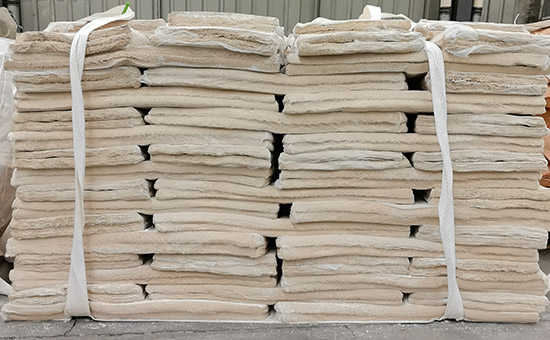
Therefore, natural rubber and reclaimed latex rubber are highly compatible and can be used together in rubber product production.
2. Reclaimed latex rubber can reduce the raw material cost of natural rubber products
Reclaimed latex rubber is much cheaper than natural rubber. In the production of natural rubber products, part of the natural rubber can be replaced by reclaimed latex rubber (like E6LYY422) while still meeting requirements for tensile strength, elongation at break, hardness, and wear resistance, reducing the proportion of expensive natural rubber in the formula. If fillers, softeners, and the vulcanization system are also optimized, the cost reduction effect will be even more significant. It's important to note that just because reclaimed latex rubber is cheaper, it doesn't mean more is always better; the amount needs to be carefully controlled.
3. Reclaimed latex rubber improves the processing performance of natural rubber products
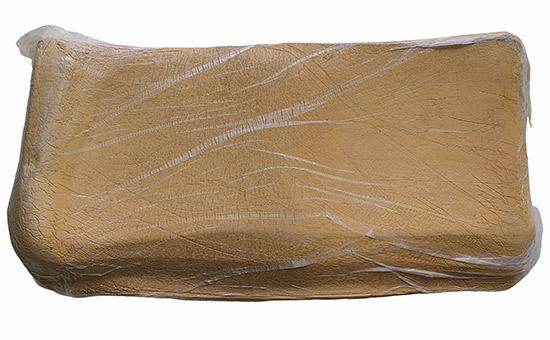
Unvulcanized natural rubber has a high Mooney viscosity, and some formulas require strong shear equipment during mixing, calendering, and extrusion. Reclaimed latex rubber has certain plasticity and flow properties, which can improve the mixing state of the compound, making it easier for the rubber to mix and mold with additives. When replacing part of the natural rubber with reclaimed latex rubber, the production process, raw material source, desulfurization degree, and refining level of the reclaimed rubber will affect Mooney viscosity, plasticity, ash content, impurities, and vulcanization properties.
4. How much reclaimed latex rubber is optimal in natural rubber products?
How much reclaimed latex rubber should be added to formulations where natural rubber is the main raw material? There's no fixed ratio suitable for all natural rubber products. Products like rubber sheets, hoses, seals, and shock-absorbing products experience different types of stress and have varied requirements for tensile strength, wear resistance, elasticity, compression set, and fatigue resistance, so the proportion of reclaimed latex rubber varies.
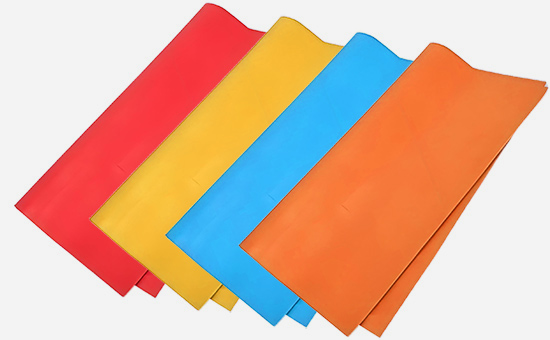
(1) For ordinary natural rubber products where cost reduction is the main goal, you can gradually increase the proportion of reclaimed latex rubber, checking hardness, tensile strength, elongation at break, tear strength, and aging resistance of the vulcanized rubber. (2) For high-strength, high-elasticity, or high dynamic fatigue products, the proportion of reclaimed latex rubber should be controlled, and preference should be given to high-strength, low-impurity, and performance-stable reclaimed latex rubber.
When reducing costs by adding reclaimed latex rubber to natural rubber products, it's essential to base this on the existing natural rubber formula. Stepwise replacement tests should be conducted to observe performance changes, and real costs should be calculated by considering natural rubber price, reclaimed rubber price, processing energy consumption, and product yield.
Exclusive original article [commercial authorization] reprint, excerpt and excerpt in any form are prohibited without written authorization. Focus on Hongyun rubber: learn the process formula and raw material technology of producing rubber products from recycled rubber to help you reduce costs and increase profits