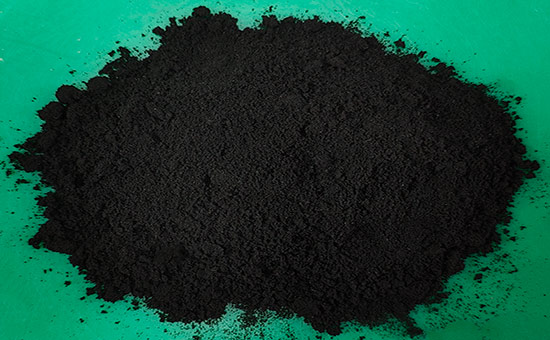
Ordinary industrial rubber sheets are mainly made from natural rubber and styrene-butadiene rubber as raw materials, processed through mixing, calendering, vulcanization, and other techniques. They have good elasticity and wear resistance and are widely used in industrial and mining machinery, transportation equipment, and other applications. Rubber powder is made from waste rubber products that are mechanically crushed or ground, containing fragments with cross-linked networks and a small amount of unsaturated double bonds. It has re-crosslinking functionality and can be used with natural rubber, styrene-butadiene rubber, and other materials to produce ordinary industrial rubber sheets, reducing costs.
1. Tips for selecting rubber powder for ordinary industrial rubber sheets
When using rubber powder to reduce costs in ordinary industrial rubber sheets, the powder particle size and usage amount directly affect the performance of the finished product. Generally, fine, small particle size rubber powder (above 60 mesh) has a large surface area, providing greater contact with the rubber matrix, enhancing interfacial bonding, and improving the physical properties of the rubber sheet; large particle size rubber powder (below 40 mesh) has good flowability and can improve the processing performance of the rubber compound.
2. Vulcanization formulas for ordinary industrial rubber sheets with added rubber powder
Natural rubber 25 parts, oil-extended styrene-butadiene rubber 35 parts, reclaimed rubber 40 parts, rubber powder 40 parts, zinc oxide 2.5 parts, stearic acid 1.3 parts, antioxidant A 1 part, antioxidant D 1 part, paraffin wax 1 part, carbon black N330 20 parts, heavy calcium carbonate 70 parts, machine oil 4.5 parts, pine tar 4.5 parts, accelerator DM 0.5 parts, accelerator M 0.75 parts, accelerator TMTD 0.15 parts, sulfur 1.6 parts; total 248.8 parts.
Natural rubber 40 parts, oil-extended styrene-butadiene rubber 60 parts, rubber powder 120 parts, zinc oxide 4 parts, stearic acid 2 parts, antioxidant A 1 part, antioxidant D 1 part, paraffin wax 1 part, carbon black N330 30 parts, heavy calcium carbonate 110 parts, machine oil 7 parts, pine tar 7 parts, accelerator DM 0.8 parts, accelerator M 1.2 parts, accelerator TMTD 0.2 parts, sulfur 2.5 parts; total 387.7 parts.
3. Rubber powder formulation design for ordinary industrial rubber sheets
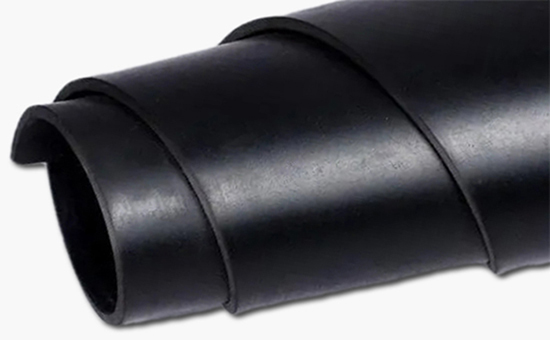
When selecting rubber powder for ordinary industrial rubber sheets, it is recommended to use 60-80 mesh powder, which is low-cost and can better bond with the rubber matrix, improving dispersion; fillers with good dispersibility, such as carbon black, are recommended to further enhance the dispersion of rubber powder and improve the physical and mechanical properties of the sheets; if necessary, small amounts of low-molecular-weight maleated polybutadiene or other compatibilizers can be used to improve compatibility among rubber powder and rubber and promote its dispersion.
In the production of ordinary industrial rubber sheets using rubber powder, it is suggested to start with a small proportion. Once the changes in vulcanized rubber properties are within an acceptable range, the proportion can be further increased to better ensure the physical property indicators of the sheets. In actual production, the addition of rubber powder will affect the curing characteristics of the compound, requiring appropriate adjustments to vulcanization time and temperature.
Exclusive original article [commercial authorization] reprint, excerpt and excerpt in any form are prohibited without written authorization. Focus on Hongyun rubber: learn the process formula and raw material technology of producing rubber products from recycled rubber to help you reduce costs and increase profits