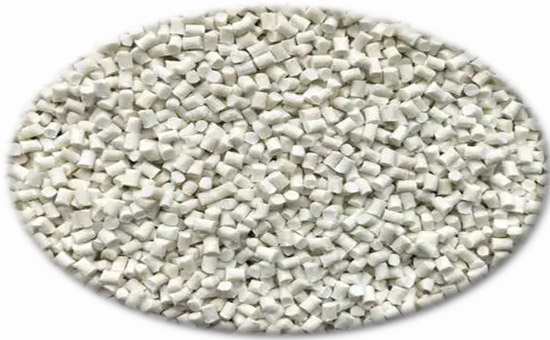
Tire rubber powder is produced by crushing waste tires and possesses the elasticity of rubber. It is low in cost, tough, wear-resistant, and aging-resistant, and is widely used for toughening and modifying plastics, with PVC being one of them. PVC, or polyvinyl chloride, has excellent flame retardancy, chemical corrosion resistance, and electrical insulation properties. It is widely used in construction materials, wires and cables, pipes, and profiles; however, rigid PVC materials have poor toughness and insufficient impact resistance, which limits their range of applications. Utilizing tire rubber powder to toughen PVC has become a choice for many manufacturers.
1. Advantages of using tire rubber powder to toughen PVC
From a performance perspective, tire rubber powder has good elasticity and toughness. Adding an appropriate amount of tire rubber powder to PVC materials can absorb impact energy and hinder crack propagation, significantly improving the impact resistance of the composite material. From a cost perspective, the price of tire rubber powder is much lower than traditional PVC toughening agents such as chlorinated polyethylene and acrylates. Proper use of tire rubber powder in PVC formulations can effectively reduce raw material costs.
As a product of waste rubber recycling, using tire rubber powder for PVC toughening and modification can achieve resource utilization of old rubber. Tire rubber powder has good compatibility with PVC, and the blended system is stable during processing, making it widely applicable in the production of rubber and plastic products.
2. Effects of tire rubber powder particle size and dosage on PVC composite material performance
(1) Effect of tire rubber powder particle size on PVC toughening
When using tire rubber powder to toughen PVC, particle size directly affects the toughening effect. Generally, 80-mesh tire rubber powder provides better toughening. If the tire rubber powder particles are too large, the tensile strength and Young's modulus of the PVC composite material will decrease significantly. If the particles are too small, they can easily become defect points in the PVC matrix, resulting in limited improvement in impact strength and significant loss of tensile strength.
(2) Effect of tire rubber powder dosage on PVC toughening
When using tire rubber powder to modify PVC, the dosage is generally controlled among 5–15 parts. Too little rubber powder results in an insignificant toughening effect, while too much reduces tensile strength and modulus.
3. Processing points for tire rubber powder toughened PVC
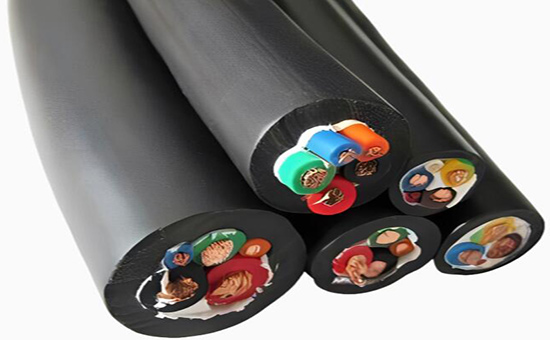
When using tire rubber powder to toughen PVC, it is necessary to use an appropriate amount of stabilizers, plasticizers, lubricants, and other additives. Common plasticizers include DOP, and common lubricants include stearic acid. To improve the dispersion uniformity of tire rubber powder in the PVC matrix, the blending temperature is controlled around 170°C, with a mixing time of 8–10 minutes to ensure thorough mixing of the rubber powder and PVC. Sheet molding is carried out at 180°C and 15 MPa, resulting in composite products with stable performance.
When using tire rubber powder to toughen PVC, it is recommended to choose fine tire rubber powder around 80 mesh and to control the dosage at about 10% of the PVC material. The resulting composite material will have higher impact strength and wider applications.
Exclusive original article [commercial authorization] reprint, excerpt and excerpt in any form are prohibited without written authorization. Focus on Hongyun rubber: learn the process formula and raw material technology of producing rubber products from recycled rubber to help you reduce costs and increase profits