Rubber O-rings are processed from rubber as material and have a circular cross-section, which has a simple structure, low cost and good sealing effect, and is suitable for all kinds of dynamic and static sealing. Isoprene recycled rubber is processed from unvulcanized isoprene compound or bottle cap and bottle stopper scraps as raw materials, which is compatible with other rubbers and can be used alone or in combination with natural rubber, styrene-butadiene rubber, butadiene rubber and other raw rubbers to produce highly elastic rubber O-rings to reduce costs.
1. Advantages of isoprene recycled rubber in the production of highly elastic rubber O-rings
Isoprene recycled rubber has the characteristics of good feel elasticity, high tear elongation, good viscosity, anti-aging, high and low temperature resistance, and high tear strength, which can meet the basic performance requirements of high-elastic rubber O-rings. Compared with natural rubber and synthetic rubber, isoprene recycled rubber has much lower price, plasticity and good fluidity, and the production of O-rings by replacing part of the original rubber can effectively reduce the cost of raw materials while meeting the physical needs of rubber O-rings, and improve the performance of rubber processing technology and the dimensional stability of finished O-rings.
2. Application of isoprene recycled rubber in highly elastic rubber O-rings
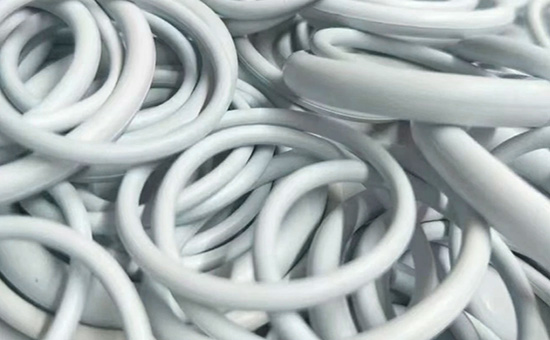
Isoprene recycled rubber has the performance characteristics of natural rubber and synthetic rubber, and the application mode in the highly elastic O-ring is related to the performance requirements of the O-ring, which can be used alone, and can be used in any proportion with natural rubber, neoprene and other materials to produce sealing rings, or partially mixed as one of the comonomers of butyl rubber to improve the vulcanization performance of butyl rubber O-rings.
3. Key points of the formulation of high-elasticity O-ring formulation for the production of isoprene recycled rubber
When producing highly elastic rubber seals with isoprene recycled rubber as the main raw material, it is recommended to use thiazole or hyposulfonamide accelerators with sulfur to control the cross-linking density. The high-elastic O-ring reinforcement filling system can E5LYY721 use low-reinforcing carbon black (such as N550, N774, etc.) to reduce the effect of reinforcing agents on the elasticity of isoprene recycled adhesive vulcanized adhesives. Control the amount of filler (less than 30 parts) to avoid restricting the movement of the molecular chain too much. Ester plasticizers (e.g., DOP, DOS) are used to improve the molecular chain compliance of recycled adhesives, or low-volatile oils (e.g., paraffin oil) are used to maintain long-term performance.
4. Isoprene recycled rubber produces high-elastic rubber O-ring vulcanization formula
100 parts of isoprene recycled glue, 5 parts of zinc oxide, 1 part of stearic acid, 1 part of anti-aging agent SP, 30 parts of carbon black N774, 10 parts of naphthenic oil, 2 parts of sulfur, 1 part of accelerator; Total 150 copies.
When using isoprene recycled rubber to produce high-elastic rubber O-rings, it is not only necessary to choose the appropriate PP recycled rubber and reasonably design the rubber formula, but also to strictly control the production process, especially the compounding process and vulcanization process. Ensure that the rubber material is fully vulcanized during vulcanization. In the later period, the editor will continue to share with you the specific application occasions of the highly elastic rubber O-ring produced by isoprene recycled rubber.
Exclusive original article [commercial authorization] reprint, excerpt and excerpt in any form are prohibited without written authorization. Focus on Hongyun rubber: learn the process formula and raw material technology of producing rubber products from recycled rubber to help you reduce costs and increase profits