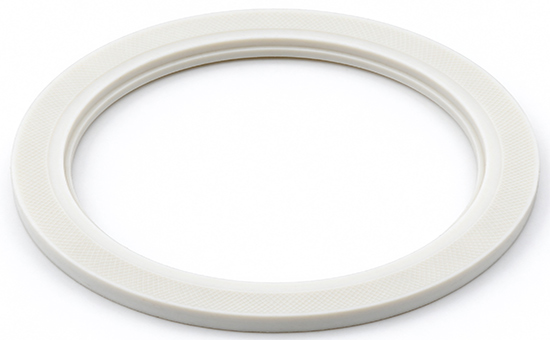
White general-purpose rubber sealing gaskets are mainly used in daily utensils, mechanical equipment, hardware accessories, and general industrial products. They serve the purposes of sealing, cushioning, and protection. There are certain requirements for the rubber's elasticity, compression set, color uniformity, and processability, and they are generally made primarily from natural rubber. Proper use of white latex recycled rubber can effectively reduce the amount of expensive raw rubber needed, lowering material costs. When using latex recycled rubber in white gaskets, it is necessary to reasonably choose the recycled rubber and appropriately adjust the production formula and processing parameters according to the gasket's application environment, hardness requirements, and vulcanization process.
1. Issues to pay attention to when choosing latex recycled rubber for white rubber sealing gaskets
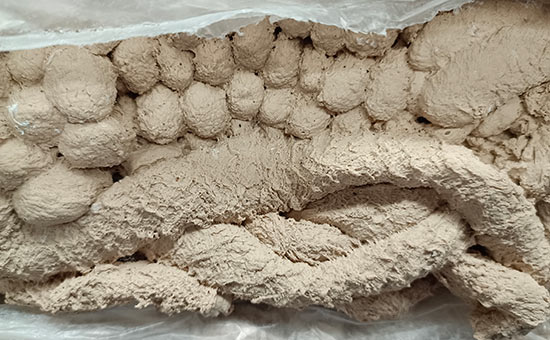
White latex recycled rubber is made from waste natural rubber, waste latex, and their products. It retains the basic performance characteristics of natural rubber, has good elasticity and flexibility, is highly compatible with natural rubber, and can replace part of the natural rubber in the production of white gaskets. It also improves processing performance and reduces raw material costs.
When choosing latex recycled rubber for white rubber gaskets, you shouldn’t just focus on the price of the recycled rubber. You need to consider factors such as rubber content, color, fineness, impurity content, Mooney viscosity, and tensile properties. It is recommended to choose white latex recycled rubber that is clean, high in whiteness, and free of obvious black spots and foreign matter to meet the coloration requirements of rubber gaskets. Small-batch trials can be conducted first to confirm that the color and physical properties meet the requirements before mass production.
2. Formulation design points for producing white rubber sealing gaskets with white latex recycled rubber
The key to producing white rubber gaskets with latex recycled rubber is to ensure "maintained whiteness, sufficient strength, no yellowing, and no bloom." Balance elasticity, hardness, sealing performance, and cost through formulation design.
White latex recycled rubber can be used together with natural rubber to produce white rubber gaskets. The blending ratio should be adjusted according to product requirements and the quality of the recycled rubber. For reinforcement filler systems, it is recommended to choose light-colored fillers such as precipitated silica or light calcium carbonate. For softening agents, choose light-colored, environmentally friendly processing oils or suitable ester plasticizers, and avoid using dark oils that may cause color contamination. For the vulcanization system, DCP with TAIC as a crosslinking agent is preferable, as it provides good whiteness, no bloom, and aging resistance. If using a sulfur vulcanization system, choose non-contaminating accelerators (e.g., Accelerator M, DM, TMTD) and control the sulfur content to prevent bloom.
3. Process points for producing white rubber sealing gaskets with latex recycled rubber
(1) Mixing process points for manufacturing rubber gaskets with latex recycled rubber
When using latex recycled rubber with natural rubber to produce white rubber gaskets, the quality of mixing directly affects color uniformity and subsequent molding effects. Keep equipment clean during mixing to avoid contamination from residual black rubber, metal impurities, or other foreign materials. It is recommended to plasticize the natural rubber fully before adding the latex recycled rubber, then add fillers and softeners in batches. Vulcanizing agents and accelerators should be added in the later stage of mixing, and the milling temperature should be controlled to prevent scorch. Strictly control the mixing temperature to avoid discoloration.
(2) Molding process points for manufacturing rubber gaskets with latex recycled rubber
When using a mixture of natural rubber and latex recycled rubber to produce white rubber gaskets, the molding process can be chosen according to the gasket dimensions and structure, commonly using compression molding. Vulcanization temperature, pressure, and time should be determined according to vulcanization test results and product thickness, generally around 150-160°C, to prevent over-curing and yellowing. For thick rubber gaskets, attention should be paid to the curing degree of both inner and outer layers to ensure uniform vulcanization.
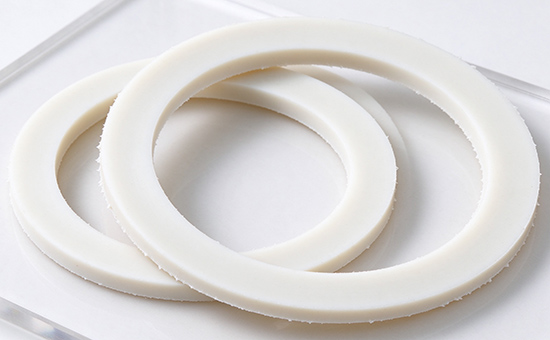
When using latex recycled rubber to reduce white general-purpose rubber gasket production costs, manufacturers can find a reasonable balance among cost and performance by adjusting the mixing ratio of recycled rubber, filler content, and vulcanization system. Grade 5 white latex recycled rubber is made from waste latex gloves imported from Malaysia through processes such as crushing, desulfurization, sterilization, drying, and molding. It has good hand feel, elasticity, and ease of coloring, and can replace part of natural rubber at a 2:1 ratio or be used together with natural rubber to produce white general-purpose rubber gaskets, reducing production costs.
Exclusive original article [commercial authorization] reprint, excerpt and excerpt in any form are prohibited without written authorization. Focus on Hongyun rubber: learn the process formula and raw material technology of producing rubber products from recycled rubber to help you reduce costs and increase profits