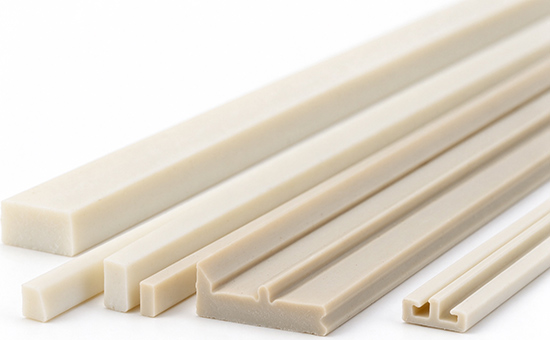
Rubber sealing strips provide dustproofing, waterproofing, sound insulation, shock absorption, and sealing functions, and are widely used in automobiles, doors and windows, machinery, home appliances, and construction engineering. Natural rubber has very high elasticity and tensile properties, but its price is relatively high. Extensive use of natural rubber to produce sealing strips increases production costs for rubber product companies; Latex reclaimed rubber is made from waste natural rubber, waste latex, and its products, and has the basic properties of natural rubber. Can it replace natural rubber in producing rubber sealing strips? What advantages does it have? And what issues should be noted?
1. What rubber sealing strips can latex reclaimed rubber produce?
Latex reclaimed rubber features good hand elasticity, high tensile strength, high elongation at break, low specific gravity, and ease of processing. It is highly compatible with natural rubber and can fully or partially replace ordinary rubber sealing strips that do not require high oil or high temperature resistance for natural rubber, such as ordinary door and window seals, furniture sealing strips, dustproof sealing strips for machinery, general-purpose rubber gaskets, and low-load shock-absorbing sealing strips.
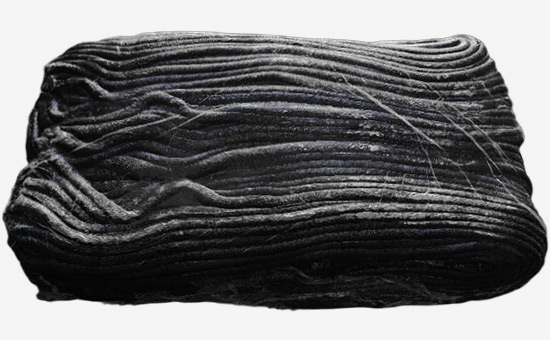
For light-colored or aesthetically sensitive rubber sealing strips, it is recommended to use white filtered latex reclaimed rubber; For economical black rubber sealing strips, black latex reclaimed rubber is sufficient, and if necessary, a small amount of natural rubber can be used together E6LYY7820 to reduce production costs. It should be noted that latex reclaimed rubber is not suitable for all sealing conditions; For sealing strips exposed to mineral oil or fuel oil for long periods or exposed to high temperatures and strong ozone, materials with corresponding media resistance or aging resistance, such as nitrile reclaimed rubber or EPDM reclaimed rubber, should be prioritized.
2. What are the advantages of producing rubber sealing strips from latex reclaimed rubber?
In terms of formulation cost, latex reclaimed rubber is much cheaper than natural rubber. Reasonable use of latex reclaimed rubber to fully or partially replace natural rubber while meeting the basic elasticity, strength, and usage requirements of sealing strips can reduce the overall cost of the rubber compound. In terms of processing performance, latex reclaimed rubber has certain plasticity, which can improve the mixing and rolling properties of the compound; It has good flowability, improving the extrusion flow of the rubber compound, which is beneficial for continuous forming of sealing strips and increasing production efficiency.
3. Key points in the formulation design of rubber sealing strips for latex reclaimed rubber production
When producing rubber sealing strips using latex reclaimed rubber, it is necessary to reasonably design rubber formulations based on the hardness, elasticity, permanent deformation of compression, usage environment, and reclaimed rubber indicators.
For sealing strips with high elasticity requirements, a combination of natural rubber and latex reclaimed rubber can be used, adjusting the ratio according to product requirements; The vulcanization system often uses a sulfur-accelerator system, determining the amount of sulfur and accelerator based on the Mooney viscosity, vulcanization characteristics, and production method of the rubber material; The reinforcement filling system can use carbon black, lightweight calcium carbonate, clay, and other additives; light-colored sealing strips can be reinforced with white carbon black, adjusting the amount according to hardness and strength requirements; The softening system can use oil paste or mineral oil to improve the fluidity of the compound.
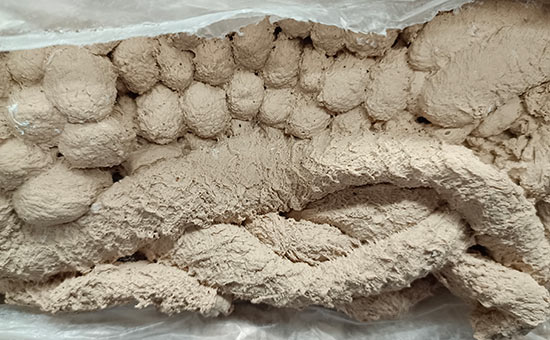
When producing ordinary rubber sealing strips with latex reclaimed rubber, it is necessary not only to select appropriate latex reclaimed rubber with appropriate specifications, appropriately adjust the ratio of natural rubber to reclaimed rubber, and reasonably design reinforcement, softening, and vulcanization systems; It is also necessary to control the mixing temperature to avoid burn risks caused by excessive rubber temperature, adjust the die head temperature, screw speed, and rubber supply rate according to the cross-sectional shape of the sealing strip during extrusion molding, reducing extrusion expansion and dimensional fluctuations; Reduce raw material costs and production energy consumption while meeting the basic performance requirements of the sealing strip.
Exclusive original article [commercial authorization] reprint, excerpt and excerpt in any form are prohibited without written authorization. Focus on Hongyun rubber: learn the process formula and raw material technology of producing rubber products from recycled rubber to help you reduce costs and increase profits