Secondary natural rubber is a secondary product whose individual indicators do not meet the genuine standard in the production process of natural rubber, and the price is much lower than that of genuine natural rubber. The raw materials of rubber soles include natural rubber, styrene-butadiene rubber and butadiene rubber, etc., which can give the sole good elasticity and softness; Can the sub-brand natural rubber have good elasticity and high mechanical strength, can it replace natural rubber to produce rubber soles? What issues should be paid attention to during use?
1. Can sub-brand natural rubber produce rubber soles?
Rubber soles are processed from rubber as the main raw material, which requires the rubber material to have good elasticity, wear resistance, suitable tensile strength, tear elongation, hardness and tear resistance. Sub-brand natural rubber has the basic performance characteristics of natural rubber, which can give rubber soles excellent elasticity, softness and high mechanical strength, and can replace natural rubber to produce various rubber soles and effectively reduce raw material costs.
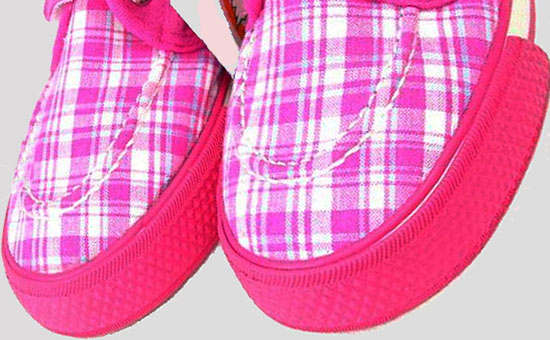
2. The application of sub-brand natural rubber in rubber soles
The sub-brand natural rubber is compatible with natural rubber, general synthetic rubber, latex recycled rubber, tire recycled rubber, etc., and can be used alone or in combination with other rubbers to produce rubber soles. In actual production, sports soles E5LYY820 have high requirements for elasticity and shock absorption, and can be processed using natural rubber, sub-brand natural rubber, latex recycled rubber and their combined glue; When using sub-brand natural rubber to produce rubber soles with high abrasion resistance, it can be used in conjunction with styrene-butadiene rubber and butadiene rubber.
3. Key points of rubber sole formula design for sub-brand natural rubber production
Sub-brand natural rubber has the basic performance characteristics of genuine natural rubber, but the processing performance and compatibility with the compound are slightly worse than that of genuine rubber, and the rubber formula needs to be adjusted appropriately.
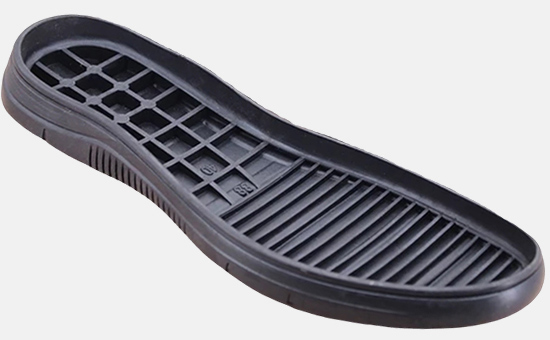
(1) Vulcanization system: the rubber sole produced by sub-brand natural rubber can use ordinary sulfur vulcanization system or semi-effective vulcanization system; The use of semi-effective vulcanization system can further improve the uniformity of cross-linking density and avoid cracking after repeated bending of the sole.
(2) Reinforcement filling system: Appropriately increase the amount of carbon black, which can be used together with high-wear-resistant carbon black and semi-reinforced carbon black to further improve the mechanical strength of the secondary brand natural rubber sole.
(3) Anti-aging system: The commonly used anti-aging agents in natural rubber soles include anti-aging agents 4020, RD, etc.; When using sub-brand natural rubber to replace a certain proportion of natural rubber to produce soles, it is recommended to appropriately increase the amount of anti-aging agent, with an increase of 0.3-0.5 parts.
(4) Softening system: When producing rubber soles from sub-brand natural rubber with high viscosity, the amount of rubber softener should be appropriately increased, such as paraffin oil, pine tar, etc.; For sub-brand adhesives with lower Mooney viscosity, reduce the amount of softener and appropriately increase the amount of stearic acid and carbon black to prevent sticking rollers and glue during glue refining.
(5) Adhesive system: The commonly used resorcinol-formaldehyde-silica (RF) system can be slightly polished on the surface of the rubber after rubber smelting to improve the adhesive strength and avoid glue opening.
4. Secondary brand natural rubber production rubber sole production process points
(1) Key points of the rubber mixing process: It is recommended to reduce the melting temperature, extend the smelting time, and improve the fluidity when making the sub-brand natural rubber with high Mooney viscosity; If the secondary brand natural rubber contains a lot of impurities, it is recommended to add a filter process after refining to remove impurities and avoid bubbles and other problems during subsequent vulcanization of rubber soles.
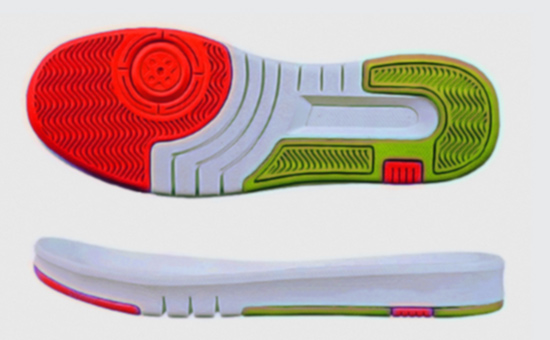
(2) Key points of vulcanization process: when the sub-brand natural rubber produces soles of different parts, the vulcanization temperature and time are different; Generally, the vulcanization temperature of rubber outsole is high, controlled at 150-155°C, and the vulcanization temperature of rubber midsole is among 145-150°C. The vulcanization temperature of light-colored and white rubber soles is recommended to be controlled below 150°C.
When using secondary brand natural rubber to reduce the cost of rubber soles, it is necessary to comprehensively consider the physical property indicators and cost budgets of secondary brand natural rubber and rubber soles, reasonably determine the mixing ratio of secondary brand rubber, appropriately adjust the production formula and process parameters, and reduce more raw material costs under the premise of ensuring the performance of rubber soles.
Exclusive original article [commercial authorization] reprint, excerpt and excerpt in any form are prohibited without written authorization. Focus on Hongyun rubber: learn the process formula and raw material technology of producing rubber products from recycled rubber to help you reduce costs and increase profits