Sponge rubber fender has advantages such as high energy absorption, low reaction, and low pressure on the hull surface, and is generally made primarily from natural rubber. For sponge rubber fender used in ports, docks, and ship berthing facilities, it must not only have a certain degree of elasticity and compression deformation but also withstand repeated impacts, long-term compression, humid environments, and outdoor aging. Can reclaimed rubber be used to reduce costs? What issues should be noted?
1. Feasibility analysis of cost reduction by blending reclaimed rubber into sponge rubber fenders
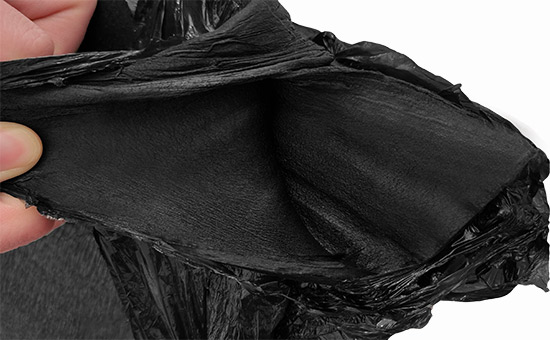
Reclaimed rubber refers to rubber that has undergone physical and chemical processes such as crushing, heating, mechanical, and chemical treatment to transform waste vulcanized rubber from an elastic state into a E6LYY622 with certain plasticity and viscosity, and can be processed and re-vulcanized, commonly referred to as reclaimed rubber. Sponge rubber fender allows the doping of reclaimed rubber, which is the mainstream approach to reduce the cost of rubber materials. However, it is necessary to choose the appropriate type of reclaimed rubber and adjust the formula according to performance requirements, rather than adding it blindly. Especially for sponge rubber fenders, the compound must balance flowability during foaming, gas retention, and vulcanization and shaping speed.
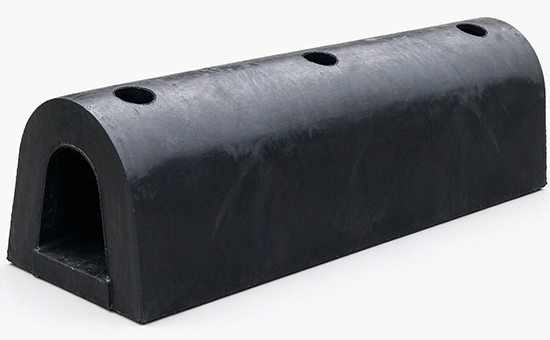
When choosing reclaimed rubber for sponge rubber fenders to reduce costs, it is necessary to determine the type of reclaimed rubber based on the base rubber and usage conditions. For rubber fender produced mainly from natural rubber, tire reclaimed rubber or natural latex reclaimed rubber can be considered.
2. How much reclaimed rubber is appropriate to add to sponge rubber fenders?
When using reclaimed rubber to reduce costs in sponge rubber fenders, the proportion of reclaimed rubber is not always better; As the proportion of reclaimed rubber increases, the elasticity, tensile properties, dynamic fatigue properties, and vulcanization characteristics of the compound may change, depending on the type, quality, and formulation system of the reclaimed rubber. When determining the proportion of reclaimed rubber in sponge rubber fenders, the proportion should be gradually increased through comparative tests based on meeting specified indicators for reaction force, energy absorption, compression recovery, and durability.When producing sponge rubber fenders from natural rubber, 50-150 parts reclaimed rubber can be mixed into 100 parts natural rubber.
3. Key points for formula design for producing sponge rubber fender using both natural rubber and reclaimed rubber
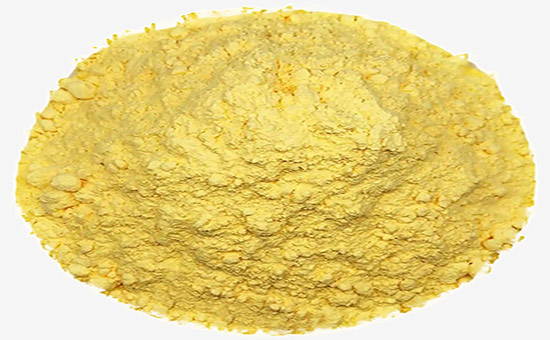
When using reclaimed rubber in sponge rubber fender formulations to reduce costs, the matching of the foaming and vulcanization systems is especially important: the decomposition temperature and gas production rate of the foaming agent should be coordinated with the crosslinking speed of the compound to avoid insufficient strength when large amounts of gas are generated, or premature cross-linking that limits normal cell expansion. Reinforcing fillers can be used to adjust the strength, hardness, and cell wall properties of the compound, but excessive filler usage may increase the viscosity of the compound and affect foam expansion; Improper use of softeners may weaken the strength of the cell walls and increase the risk of bubble collapse.
The reclaimed rubber itself may introduce certain carbon black, mineral fillers, and softening components. When designing sponge rubber fender formulations containing reclaimed rubber, these factors should be taken into account to avoid repeated additions that could cause excessive filler or imbalance of rubber hardness. When producing sponge rubber fender using both natural rubber and reclaimed rubber, mixing temperature, rubber discharge temperature, parking time, foaming temperature, and vulcanization time should also be controlled; Determination should be based on the vulcanization characteristics of the compound and foaming tests, rather than relying solely on experience.
4. Produce sponge rubber fender formulas using a combination of natural rubber and reclaimed rubber
Natural rubber 40 parts, reclaimed rubber 60 parts, stearic acid 4 parts, antioxidant 4010 0.5 parts, antioxidant RD 0.5 parts, carbon black N774 6 parts, light calcium 12 parts, machine oil 16 parts, petroleum jelly 12 parts, black oil paste 12 parts, accelerator DM 0.6 parts, accelerator M 0.4 parts, accelerator TMTD 1 part, sulfur 1 part, antioxidant H 2.8 parts, baking soda 6 parts, alum 4 parts, totaling 178.8 parts.
When reducing costs by adding reclaimed rubber to sponge rubber fenders, it is essential to choose appropriate reclaimed rubber based on actual needs, focusing on hardness, tensile strength, elongation at break, compressive stress, recovery ability after repeated compression, permanent compression deformation, uniformity of foam holes, and aging resistance; If the elasticity of the rubber fender decreases or the foam structure is uneven, the quality of reclaimed rubber, dosage ratio, foaming system, vulcanization speed, and mixing process should be investigated one by one, rather than simply increasing reinforcing agents or adjusting the amount of foaming agents.
Exclusive original article [commercial authorization] reprint, excerpt and excerpt in any form are prohibited without written authorization. Focus on Hongyun rubber: learn the process formula and raw material technology of producing rubber products from recycled rubber to help you reduce costs and increase profits