When producing rubber products using recycled rubber, the vulcanization system determines key properties like hardness, elasticity, strength, and heat resistance. If the vulcanization process is not properly controlled (for example, under-vulcanization or over-vulcanization), products with the same formula can have performance differences of several times, or even fail early. So how do the additives in a recycled rubber vulcanization system work together?
1. Recycled Rubber Vulcanization System: The Role of Vulcanizing Agents
When recycled rubber is the main raw material for producing rubber products, vulcanizing agents are key components in forming a three-dimensional network structure in the rubber. They react chemically with the recycled rubber to form crosslink bonds. Most vulcanizing agents participate in crosslinking—for example, sulfur vulcanization forms mono-, di-, or polysulfide bonds. Some only initiate crosslinking without being part of the bonds themselves, like peroxide vulcanization forming carbon-carbon bonds. When producing recycled rubber products, the choice and amount of vulcanizing agent should not just be based on theoretical dosage. One must consider the existing crosslink structures, residual vulcanization system in the recycled rubber, and adjust according to vulcanization degree, Mooney viscosity, ash content, and the type of the original rubber.
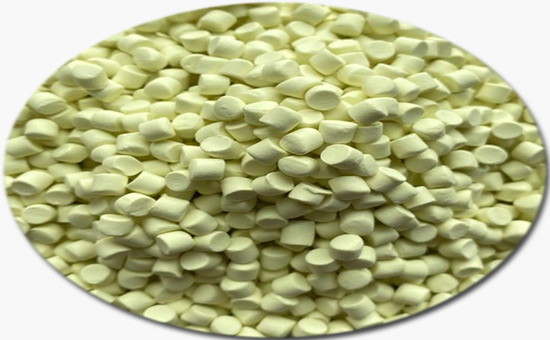
2. Recycled Rubber Vulcanization System: Accelerators Speed Up Vulcanization
During recycled rubber vulcanization, accelerators can increase the rate at which the vulcanizing agent reacts with rubber, reduce vulcanization temperature, lower the amount of vulcanizing agent needed, and improve vulcanized rubber properties, without directly acting on the recycled rubber itself. Common accelerators in recycled rubber formulas include thiazoles, sulfenamides, guanidines, and dithiocarbamates. Different accelerators vary greatly in scorch time, vulcanization speed, and vulcanization uniformity.
It’s important to note that recycled rubber itself has good processing flow. If the accelerator system reacts too fast, scorch risks may occur during mixing, calendering, extrusion, or storage. If the chosen accelerator reacts too slowly, vulcanization efficiency may drop. So, vulcanizing recycled rubber shouldn’t just focus on "fast vulcanization"—it should be set according to equipment, product thickness, and vulcanization temperature.
3. Recycled Rubber Vulcanization System: Activators Work Together with Accelerators
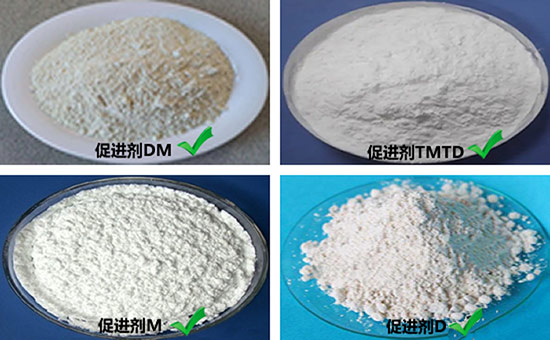
Activators in recycled rubber vulcanization systems are not the main component responsible for crosslinking. Instead, they boost the activity of accelerators to maintain high reaction efficiency, without directly reacting with the recycled rubber or vulcanizing agent. In traditional sulfur vulcanization systems for recycled rubber, zinc oxide and stearic acid are typical activators, forming an active zinc salt system that helps the accelerator work effectively.
The activating effect of activators is also influenced by acidic substances, ash, carbon black, and other additives in the recycled rubber. When adjusting the vulcanization system of recycled rubber products, activator dosage has an optimal range. Too much not only raises costs but can negatively affect processing and the properties of the vulcanized rubber. For low-cost recycled rubber products, dosage should be determined based on vulcanization curves and physical property tests.
4. Recycled Rubber Vulcanization System: Anti-scorching Agents Improve Safety
Anti-scorching agents in recycled rubber vulcanization extend the scorch time of rubber, ensuring safe processing and preventing premature scorch, but they basically do not affect the normal vulcanization time. Their main role is to delay premature vulcanization during processing and storage, providing necessary operational safety margins for mixing, calendering, extrusion, and molding. Common anti-scorching agents in recycled rubber formulas include CTP (N-cyclohexylthiophthalimide).
In short, when producing rubber products with recycled rubber: vulcanizing agents establish crosslinks, accelerators increase crosslinking efficiency, activators help the accelerators work, and anti-scorching agents control premature vulcanization during processing. Designing a proper vulcanization system for recycled rubber products is not just about changing the amount of one material, but finding a balance among the additives, taking into account vulcanization curves, processing safety, vulcanized rubber properties, and production cost, so that recycled rubber maximizes its cost advantage while ensuring product performance.
Exclusive original article [commercial authorization] reprint, excerpt and excerpt in any form are prohibited without written authorization. Focus on Hongyun rubber: learn the process formula and raw material technology of producing rubber products from recycled rubber to help you reduce costs and increase profits