Asphalt tends to soften in high-temperature environments and becomes brittle and prone to cracking in low-temperature conditions, affecting the lifespan of road pavements and building waterproof materials. When recycled rubber powder made from waste rubber products is used to modify asphalt, the modification effect depends not only on the amount of rubber powder added but also on the quality of the powder, particle size, asphalt composition, and processing technology. How should rubber powder be correctly chosen for asphalt modification? How is rubber powder-modified asphalt prepared? What issues need attention?
1. Tips for choosing rubber powder for modified asphalt
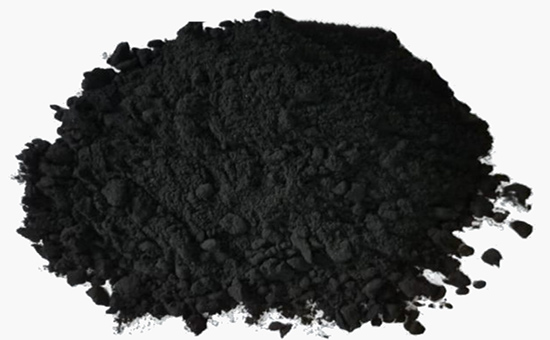
Recycled rubber powder is made from waste rubber through mechanical crushing or grinding into powders of different particle sizes. It retains part of the original rubber's cross-linked structure. When mixed with asphalt, it swells by absorbing some of the light components in asphalt, changing the viscosity and high/low-temperature performance of the modified asphalt.
When selecting rubber powder for asphalt modification, powders with higher rubber content, finer particle size, and larger specific surface area are more conducive to contact and swelling with asphalt. However, the finer the recycled rubber powder (e.g., E6LYY73), the higher the processing energy and production cost. Generally, 40-80 mesh powder is chosen, which significantly improves the stickiness, elasticity, and temperature response of the asphalt. Fibers, metal impurities, and other non-rubber components in the powder should be controlled within a suitable range to avoid affecting the uniformity of the modified asphalt.
2. Preparation process of rubber powder-modified asphalt
(1) Wet preparation of rubber powder-modified asphalt
The wet method involves adding rubber powder to asphalt heated to 160-180℃ and continuously stirring for about 2 hours to make a uniform modified asphalt suspension, which is then mixed with aggregates to form a mixture. The rubber powder swells fully at high temperatures and deeply blends with the asphalt, achieving a good modification effect. The usual dosage is 6%-15% of the asphalt mass, with the exact proportion depending on the rubber powder particle size, asphalt properties, mixing temperature, reaction time, and target performance. It is mainly used in asphalt concrete wear layers and maintenance surface projects.
(2) Dry preparation of rubber powder-modified asphalt
The dry method involves spraying rubber powder directly into the mixer for dry mixing with the aggregate. The dosage is 2%-3% of the mixture mass. This process is simple and requires low equipment, suitable for applications with lower modification requirements or equipment constraints.
3. How to improve compatibility and dispersion among recycled rubber powder and asphalt
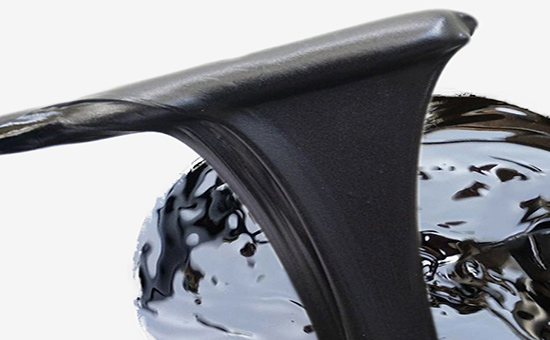
The compatibility of rubber powder with asphalt directly affects the performance of rubber powder-modified asphalt. Unevenly dispersed recycled rubber powder tends to form local clumps, resulting in fluctuations in modified asphalt performance. The modification process should be adjusted based on the stirring system, equipment conditions, and asphalt type. Adjusting stirring speed, shear strength, mixing temperature, and mixing time can effectively improve powder dispersion.
For systems with insufficient compatibility, it is recommended to use activated rubber powder. Activation can improve the interfacial interaction and processing adaptability among the powder and asphalt, but not all activated powders are better than regular powders. A comprehensive assessment should be made based on the asphalt type and the desired modification effect.
4. Applications of rubber powder-modified asphalt in roads and waterproof materials
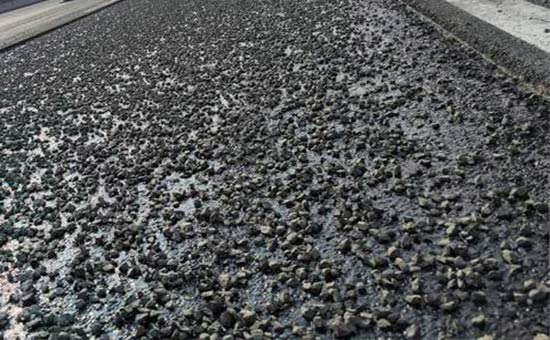
In road engineering, rubber powder-modified asphalt can be used for asphalt mixtures and related pavement maintenance projects. Adding a proper amount of rubber powder to asphalt can significantly improve high-temperature deformation resistance, low-temperature crack resistance, and fatigue resistance. In building waterproofing, rubber powder can be blended with asphalt or resin to make waterproof membranes or materials, providing both flexibility, heat resistance, low-temperature performance, adhesion, and aging resistance.
Using recycled rubber powder to modify asphalt not only reduces modification costs but also improves asphalt's high- and low-temperature performance. During the preparation of rubber powder-modified asphalt, adjustments should be made according to raw material characteristics, production processes, and usage conditions. By reasonably controlling the rubber powder dosage, a balance among cost reduction and performance can be achieved while ensuring usability.
Exclusive original article [commercial authorization] reprint, excerpt and excerpt in any form are prohibited without written authorization. Focus on Hongyun rubber: learn the process formula and raw material technology of producing rubber products from recycled rubber to help you reduce costs and increase profits