Tire reclaimed rubber is processed from waste tire rubber powder as raw material, featuring good plasticity, mixing and processing properties, and flowability. It can be used alone or combined with natural rubber, styrene-butadiene rubber, and cis-butadiene rubber to produce rubber sealing strips, effectively reducing raw material costs. When using tire reclaimed rubber to reduce sealing strip production costs, the amount of reclaimed rubber added is not always better; it needs to be determined based on the operating environment of the sealing strip, the cross-sectional structure, and specific requirements for aging resistance, elasticity, compression deformation, and dimensional stability.
1. Tire reclaimed rubber is suitable for producing indoor seals and general dustproof sealing strips
Rubber sealing strips used in mechanical equipment, containers, auxiliary sealing of doors and windows, and general dust protection require certain processing properties, hardness, tensile strength, and compression rebound of the rubber material, but they do not endure particularly harsh high temperatures, ozone, or intense sunlight for long periods during operation. Such rubber sealing strips can be appropriately E6LYY64 tire reclaimed rubber. For rubber sealing strips with higher appearance requirements, ultrafine tire reclaimed rubber can be used, resulting in smoother extruded surfaces and more stable dimensions; When high strength requirements are required for sealing strips, natural rubber, styrene-butadiene rubber, and tire reclaimed rubber can be used in appropriate proportions.
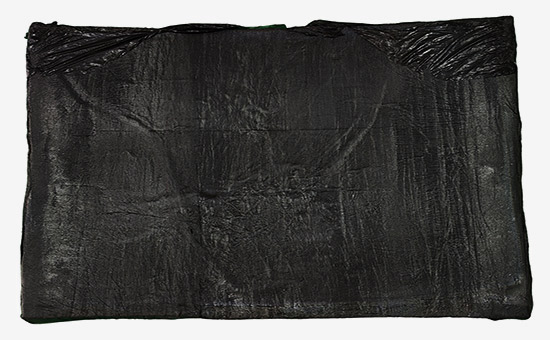
2. Outdoor rubber sealing strips should not use large amounts of tire reclaimed rubber
Sealing strips for automobiles, construction machinery, and outdoor equipment are exposed to air, sunlight, rain, and temperature changes for long periods, requiring higher ozone resistance, thermal oxygen aging resistance, and flexural resistance; Tire reclaimed rubber has relatively poor aging resistance and is not suitable for large dopings; If the product needs long-term outdoor use, consider using tire reclaimed rubber in combination with natural rubber and synthetic rubber to improve overall sealing performance by adjusting the proportion of the main rubber type.
For high-demand doors, windows, automotive, and building sealing applications, it is recommended to use EPDM rubber or EPDM reclaimed rubber to meet the performance requirements for rubber sealing strips in high and low temperature resistance, ozone resistance, and weather resistance.
3. Key design points for the vulcanization system of rubber sealing strips in tire reclaimed rubber production
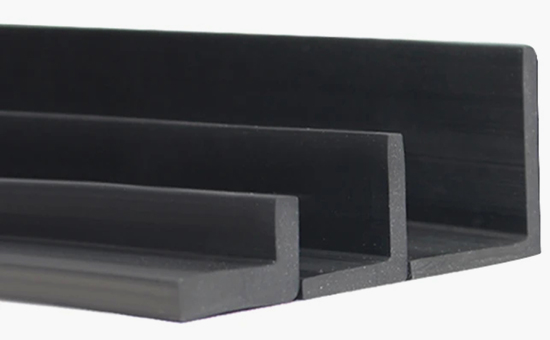
When producing ordinary rubber sealing strips using tire reclaimed rubber, appropriately increasing the proportion of reclaimed rubber in the main compound can achieve better cost and processing balance. When designing the vulcanization system for tire reclaimed rubber sealing strip formulas, the thickness and production method of the sealing strip should be comprehensively considered: when the sealing strip cross-section is thin and continuous extrusion speed is fast, vulcanization speed must be balanced with the safety of compounding compounds. Accelerators D/DM/M/TMTD combined with sulfur can be used.
4. Key Points of Rubber Sealing Strip Processing Techniques for Tire Reclaimed Rubber Production
Most rubber sealing strips are formed by extrusion; the plasticity of the compound, type and amount of filler, softener dosage, extrusion speed, and die head temperature all affect extrusion deformation; Properly adjusting the carbon black and packing system, improving hot refining uniformity, and appropriately controlling extrusion speed help enhance the dimensional stability of semi-finished products.
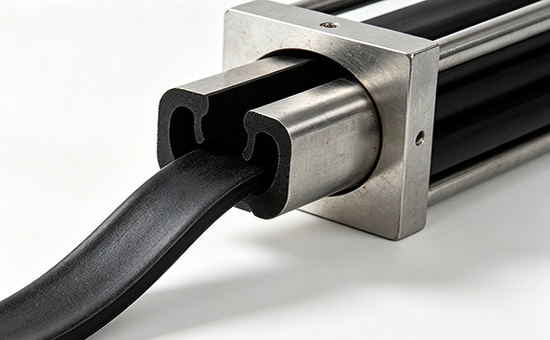
When producing rubber sealing strips with tire reclaimed rubber, indicators such as Mooney viscosity, ash content, carbon black content, and volatile content of different batches of reclaimed rubber should be kept relatively stable; During mixing, pay attention to the timing of softener addition and the rubber discharge temperature to avoid excessive plastic fluctuations in the compound; During extrusion, determine screw speed and die head temperature based on the mouth shape, compound hardness, and equipment characteristics; simply increasing the temperature should not solve extrusion problems.
To reduce costs with tire reclaimed rubber for rubber sealing strips, it is first necessary to determine whether tire reclaimed rubber can be used based on the application scenario. Then, reasonably design the rubber sealing strip formula based on the performance requirements of the sealing strip, the physical properties of the tire reclaimed rubber, and processing conditions. Strictly control the mixing and extrusion processes to maximize the processing and cost advantages of tire reclaimed rubber while ensuring the performance of the rubber sealing strip.
Exclusive original article [commercial authorization] reprint, excerpt and excerpt in any form are prohibited without written authorization. Focus on Hongyun rubber: learn the process formula and raw material technology of producing rubber products from recycled rubber to help you reduce costs and increase profits