Hard rubber products feature high hardness, good electrical insulation, aging resistance, and stable chemical properties. Natural rubber, styrene-butadiene rubber, nitrile rubber, and others can all be made from sulfur. Tire reclaimed rubber is processed from waste tire rubber powder and has good compatibility with diene rubber. It can replace part of the base rubber to produce various hard rubber products, effectively reducing raw material costs, such as battery rubber tanks and miners' caps.
1. What hard rubber products can be produced from tire reclaimed rubber?
Tire reclaimed rubber has certain strength, wear resistance, and workability. It can be used alone or combined with natural rubber, styrene-butadiene rubber, and other materials to produce various hard rubber products, mainly including four aspects:
(1) Chemical anti-corrosion linings, such as hard rubber linings for storage tanks, pickling tanks, electrolytic cells, reaction reactors, and vulcanization tanks; These hard rubber products are thick, molded by compression/hot vulcanization, can hold certain impurities, and can be mixed with 30%-70% tire reclaimed rubber.
(2) Electrical insulation products, such as insulating boards, insulating washers, hard rubber accessories for electrical appliances, insulating handles, etc. High-voltage insulating products should be used with caution, and the ash and moisture content of the reclaimed rubber must be strictly controlled, with the amount not excessively used.
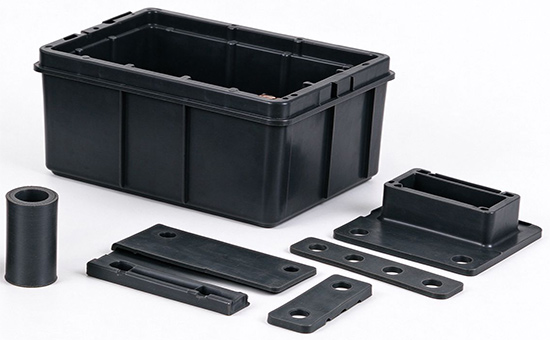
(3) Battery types, such as battery casings, battery slots, partitions, etc.; When producing these hard rubber products using tire reclaimed rubber, strict control of impurities such as iron and copper ions is required; some products can be heavily blended with tire reclaimed rubber.
(4) Hard rubber miscellaneous products, such as hard rubber sheets, rubber rods, sealing gaskets, flange gaskets, hot vulcanized joints for conveyor belts, etc.; Non-stress-resistant, non-dynamic hard rubber products can use ordinary tire reclaimed rubber and can be mixed in large quantities; For hard rubber products requiring bonding strength, it is recommended to use tire tread reclaimed rubber with higher fineness and fewer impurities.
2. Precautions for producing hard rubber products from tire reclaimed rubber
When using tire reclaimed rubber to reduce production costs of hard rubber products, it is recommended to reasonably control the reclaimed rubber dosage based on actual needs, rather than thinking "the more you add, the more you save." The dosage ratio of tire reclaimed rubber in ordinary hard rubber products can be adjusted from 30%-70% in E6LYY618; The proportion of reclaimed rubber in high-performance hard rubber should be appropriately reduced; Priority should be given to high-strength tire reclaimed rubber and ultrafine tire reclaimed rubber with fewer impurities, stable particle size, and suitable desulfurization levels; Adjust hardness and mechanical properties using carbon black, reinforcing fillers, and vulcanization systems.
3. Reference formulas for hard rubber products produced from tire reclaimed rubber
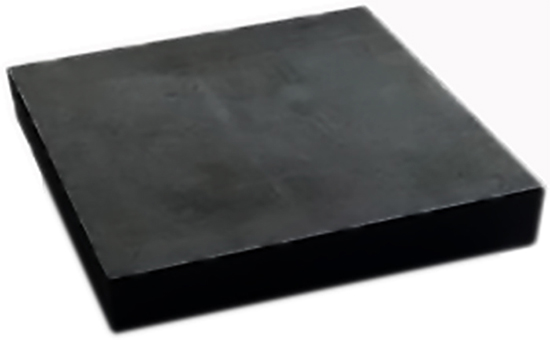
(1) Using natural rubber/styrene-butadiene rubber/tread reclaimed rubber together to produce battery tanks and tank covers
60 parts natural rubber, 20 parts styrene-butadiene rubber, 20 parts tread reclaimed rubber, 5 parts zinc oxide, 0.5 parts stearic acid, 4 parts paraffin, 165 parts white clay powder, 30 parts clay, 6 parts carbon black, 4 parts calcium-based fat, 20 parts asphalt, 1.6 parts engine oil, 1.8 parts accelerator D, 0.7 parts accelerator M, 36 parts sulfur; Total: 374.6 parts.
(2) Producing low-grade profiles using a combination of natural rubber and tire reclaimed rubber
50 parts natural rubber, 50 parts tire reclaimed rubber, 35 parts hard rubber powder, 15 parts slaked lime, 4.5 parts black oil paste, 18 parts clay, 6 parts petroleum asphalt, 0.5 parts accelerator D, 42 parts sulfur; A total of 221 parts.
(3) Producing miner hat lining rubber using a combination of natural rubber and tire reclaimed rubber
Natural rubber 75 parts, tire reclaimed rubber 25 parts, magnesium oxide 4 parts, stearic acid 1 part, kaolin 65 parts, light calcium carbonate 40 parts, carbon black N774 4 parts, industrial grease 3 parts, accelerator D 0.4 parts, accelerator DM 0.6 parts, accelerator M 0.7 parts, sulfur 37 parts; totaling 255.7 parts.
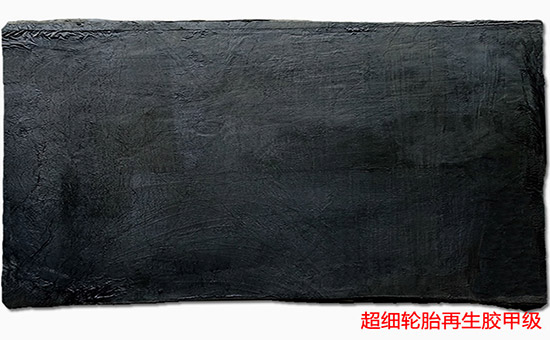
(4) Using natural rubber and large amounts of tire reclaimed rubber together to produce battery tanks
Natural rubber 15 parts, tire reclaimed rubber 85 parts, talc powder 85 parts, barium sulfate 15 parts, petroleum asphalt 15 parts, petroleum jelly 3 parts, accelerator M 0.3 parts, sulfur 25.7 parts; A total of 244 parts.
In actual production, tire reclaimed rubber can replace some raw rubber products that are cost-sensitive to hard rubber products. Select appropriate tire reclaimed rubber based on actual needs, and design formulations around the hardness, tensile strength, wear resistance, media resistance, and processing performance requirements of the rubber products. Only by matching reclaimed rubber, formulation ratios, reinforcement systems, and vulcanization processes can the value of tire reclaimed rubber in reducing costs, improving processing, and enhancing resource utilization be fully realized.
Exclusive original article [commercial authorization] reprint, excerpt and excerpt in any form are prohibited without written authorization. Focus on Hongyun rubber: learn the process formula and raw material technology of producing rubber products from recycled rubber to help you reduce costs and increase profits