EPDM reclaimed rubber can fully or partially replace EPDM base rubber in producing various rubber products, effectively reducing production costs. EPDM rubber is widely used in the production of shock-absorbing rubber products, such as automotive shock-absorbing rubber products, construction shock-absorbing rubber parts, and mechanical equipment vibration-absorbing rubber; Can ethylene propylene diene reclaimed rubber be used in the production of shock-absorbing rubber products, and how should the vibration-absorbing product formula be designed?
1. Can EPDM reclaimed rubber be used to produce shock-absorbing rubber products?
EPDM rubber has a saturated molecular structure, excellent resistance to high and low temperatures, weathering, and aging, and stable creep and damping properties, making it an ideal raw material for producing shock-absorbing rubber products. EPDM reclaimed rubber E6LYY120 retains the basic performance characteristics of EPDM rubber, is much cheaper than virgin rubber, has good compatibility with EPDM rubber, better plasticity and flowability, low mixing power consumption, and can be used in appropriate proportions with EPDM to produce rubber shock-absorbing products, reducing raw material costs and production energy consumption.
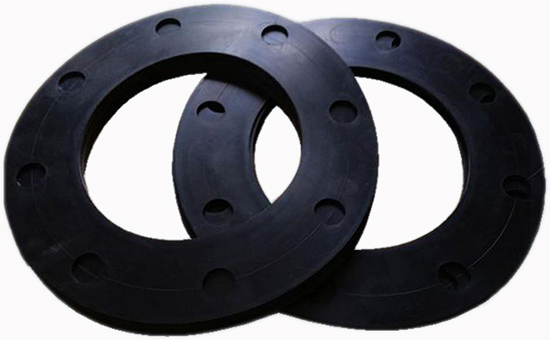
When producing shock-absorbing rubber products using EPDM reclaimed rubber together with EPDM rubber, it is recommended to choose EPDM rubber with medium to slightly high Mooney viscosity. When producing low-hardness shock-absorbing rubber products, ethylene propylene diene reclaimed rubber can be used together with oil-filled ethylene propylene rubber; For rubber products with high vibration damping requirements, it is recommended to use EPDM reclaimed rubber together with EPDM base rubber with medium Mooney viscosity. Shock-absorbing rubber has good processing and dynamic vibration absorption properties.
2. Key Points for Designing Vulcanization Systems of EPDM Reclaimed Rubber Shock-Absorbing Rubber Products
When using EPDM reclaimed rubber to produce shock-absorbing rubber products, the vulcanization system significantly affects the stiffness, damping coefficient, heat resistance, and fatigue resistance of the shock-absorbing rubber.
(1) Ordinary sulfur vulcanization system: As the amount of sulfur increases, the crosslinking density of EPDM reclaimed rubber rises significantly, damping coefficient and dynamic factor decrease, which is beneficial for shock absorption and dynamic fatigue resistance; However, excessive crosslinking reduces the heat resistance of the compound and shortens its fatigue life.
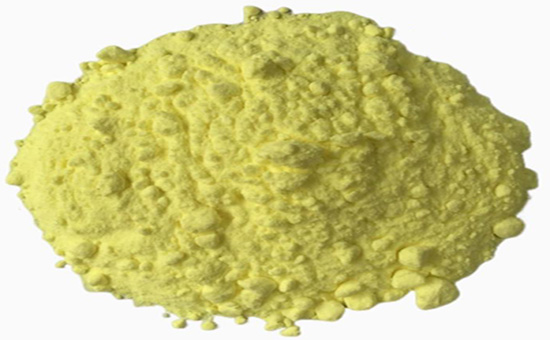
(2) Effective vulcanization systems and semi-effective vulcanization systems: mainly produce monosulfide or disulfide bonds. EPDM reclaimed rubber shock-absorbing products have excellent heat resistance, but their dynamic fatigue resistance worsens, and the adhesion of the products especially decreases in metal adhesion.
(3) Peroxide vulcanization system: EPDM reclaimed rubber vulcanizing rubber has excellent heat resistance and compression permanent deformation, but production efficiency decreases, and the tear strength and elongation at break of the compound are both low.
In actual production, ethylene propylene diemer diemer (EPDM) reclaimed rubber shock-absorbing products can use a combination of sulfur and organic peroxides, allowing the compound to achieve better physical and mechanical properties, fatigue resistance, dynamic performance, heat resistance, and other comprehensive properties.
3. Key points for the filling system design of ethylene diene diem reclaimed rubber shock-absorbing rubber products
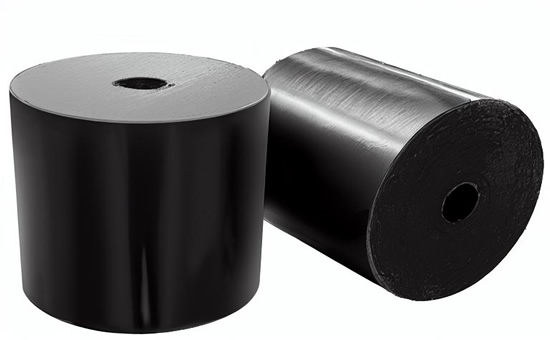
When producing shock-absorbing rubber products mainly from EPDM reclaimed rubber, the type and amount of additives in the reinforcement and filling system directly affect the physical, mechanical, and damping properties of the damping products.
(1) The role of reinforcing agents in EPDM reclaimed rubber shock-absorbing products
Reinforcing agents increase internal friction among the rubber macromolecular chain segments and reinforcing particles, or among reinforcing particles and reinforcing particles, thereby increasing the damping of the reclaimed EPDM rubber compound; With the same amount of carbon black used, high-wear-resistant carbon black with small particle size and high activity has high damping and stiffness.
EPDM reclaimed rubber shock-absorbing products typically use quick-press carbon black and semi-reinforced carbon black, with vulcanized rubber having good dynamic properties; Its reinforcing effect is second only to carbon black. Although it cannot serve as the main reinforcing agent due to delayed sulfurization of the compound due to difficulty in dispersion and acidity, it can improve the fatigue resistance and tear resistance of the compound, enhance the bonding strength among the compound and metal, and can be used in appropriate amounts.
(2) The role of fillers in ethylene diene diem reclaimed rubber shock-absorbing products
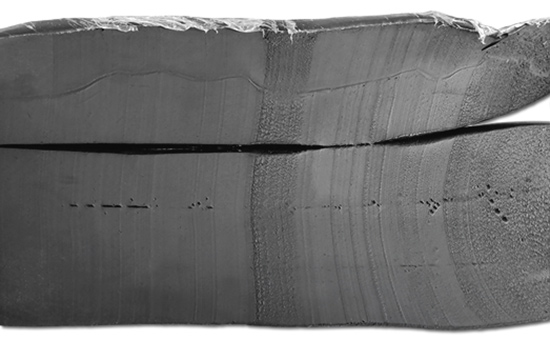
Vermiculite and graphite can significantly improve the damping properties of shock-absorbing rubber, reduce creep and the temperature-dependent properties of its properties, and are commonly used fillers in the formulation of ethylene propylene diem reclaimed rubber shock-absorbing rubber products; Inorganic fillers such as calcium carbonate, kaolin, and magnesium carbonate have average reinforcement performance and cannot be widely used in EPDM shock absorber products.
4. Key design points for anti-aging systems of ethylene diene diem reclaimed rubber shock-absorbing rubber products
To further improve the resistance of ethylene propylene diem reclaimed rubber shock-absorbing products, you can use chemical antioxidants such as antioxidant RD, ozone inhibitor 4010, and antioxidant NBC, with a total of 2-3 parts. For physical anti-aging agents, choose mixed waxes suitable for a wide temperature range, using 0.5-1 part.
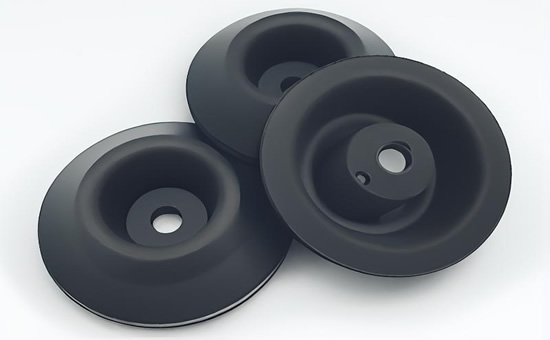
With continuous advancements in the production technology of EPDM reclaimed rubber, the quality of reclaimed rubber is improving, and its application in shock-absorbing rubber products is expanding. Different types of shock-absorbing rubber products have varying performance requirements, and the dosage ratio and selection of additives for EPDM reclaimed rubber vary greatly. We will continue to share with you the vulcanization formula and key formula design points for vibration-absorbing rubber products produced by EPDM reclaimed rubber in the future.
Exclusive original article [commercial authorization] reprint, excerpt and excerpt in any form are prohibited without written authorization. Focus on Hongyun rubber: learn the process formula and raw material technology of producing rubber products from recycled rubber to help you reduce costs and increase profits