Nitrile reclaimed rubber has excellent oil resistance and good wear resistance, and can fully or partially replace nitrile rubber in producing various oil-resistant and wear-resistant rubber products, reducing costs. Rubber shock absorbers are the core components of mechanical vibration isolation and shock absorption. When working with long-term contact with mineral oil, hydraulic oil, or lubricating grease, nitrile rubber with excellent oil resistance is often used. Can nitrile reclaimed rubber be used in the production of rubber shock absorbers to reduce costs? How to choose the right nitrile reclaimed rubber? Which nitrile rubber shock absorber sleeves can be mixed with nitrile reclaimed rubber? What issues should be noted when producing rubber bushings with reclaimed nitrile rubber?
1. Can nitrile reclaimed rubber be used to produce rubber shock absorber sleeves?
Nitrile reclaimed rubber is made from waste nitrile rubber products and processed through crushing, desulfurization, refining, filtration, and other processes. It retains the core characteristics of nitrile rubber, such as oil resistance, wear resistance, and elastic cushioning, meeting the working requirements of nitrile shock-absorbing and buffer bushings. Used in rubber shock-absorbing sleeve production, it effectively prevents swelling, deformation, hardening, and failure in oil-stained working environments.
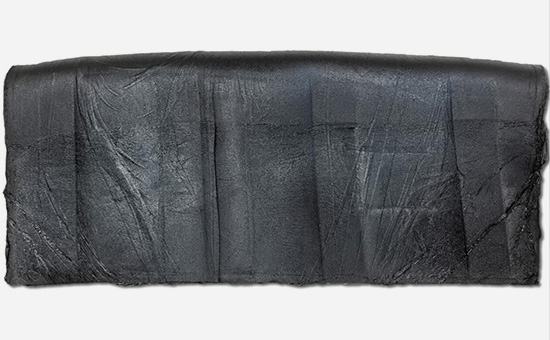
Nitrile reclaimed rubber has processing advantages such as good flowability, high plasticity, low mixing power consumption, and excellent dimensional stability. It can improve the difficulties of mixing pure virgin rubber and poor molding fluidity, reduce the difficulty of extrusion and compression processing, minimize defects such as bubbles, material shortages, and edge warping, and improve the pass rate of finished rubber shock-absorbing sleeves. Proper use of nitrile reclaimed rubber in the production of oil-resistant rubber shock-absorbing sleeves can not only reduce raw material costs but also improve the processing performance of the rubber compound and lower production energy consumption.
2. How to choose the right nitrile reclaimed rubber for rubber shock absorbers to reduce costs?
When choosing nitrile reclaimed rubber for rubber shock absorber sleeves, the core requirements are oil resistance, low compression permanent deformation, and fatigue resistance. The higher the acrylonitrile content, the better the oil resistance of the reclaimed nitrile rubber. E5LYY1212 nitrile reclaimed rubber with acrylonitrile content of 36%-42% offers the best cost performance; Reclaimed rubber with a Mooney viscosity of 45–75 can balance fluidity and stiffness; It is recommended that the tensile strength of nitrile reclaimed rubber not be less than 8MPa, with an elongation at break of about 450%; Choosing high-fineness, impurity-free nitrile reclaimed rubber can prevent friction on the damping sleeve from damping the mating.
3. What types of rubber shock absorbers can be produced from nitrile reclaimed rubber?
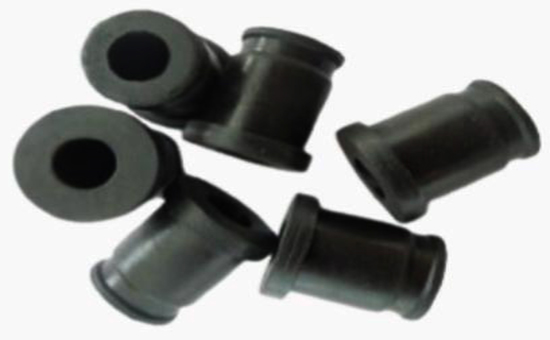
Rubber shock absorber bushings in fields such as automotive rear axle bushings/shock absorbers, transmission/engine mounting, industrial equipment vibration isolation (fans, pumps, air compressors), pipeline flexible connections/vacuum idler systems, and construction machinery/rail transit vibration reduction can all be appropriately blended with nitrile reclaimed rubber. For example, automotive chassis, hydraulic machinery, oil pump equipment, and general transmission devices require long-term contact with grease and dust, with strict requirements for oil resistance, shock absorption stability, and durability. Using nitrile reclaimed rubber can meet these requirements and reduce raw material costs.
4. Precautions for producing rubber shock absorbers from nitrile reclaimed rubber
(1) Pay attention to the proportion of nitrile reclaimed rubber
When adding nitrile reclaimed rubber to oil-resistant rubber shock-absorbing sleeves, it is not recommended to use it entirely. Controlling the dosage ratio among 30%-70% can effectively reduce raw material costs while ensuring the product's performance and lifespan.
(2) Appropriately adjust the production formula of rubber shock absorber sleeves containing reclaimed nitrile rubber
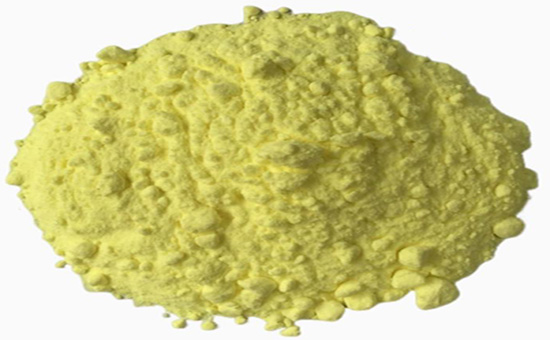
Nitrile reclaimed rubber contains a large number of cross-linked molecular chain fragments and residual vulcanizing additives. If the vulcanization system of the original rubber is copied during formulation design, it can easily shorten the scorching time or shift the positive vulcanization point. It is recommended to appropriately reduce the amount of accelerator and increase the sulfur content by 10%-20% to ensure sufficient cross-linking; In the reinforcement system, it is recommended to choose semi-reinforced carbon black and appropriately increase the amount of carbon black to avoid excessive use of medium-ultra wear-resistant carbon black; Softeners should be used sparingly, with priority given to cold-resistant plasticizers.
(3) Key process points for producing rubber shock-absorbing sleeves using nitrile rubber/nitrile reclaimed rubber together
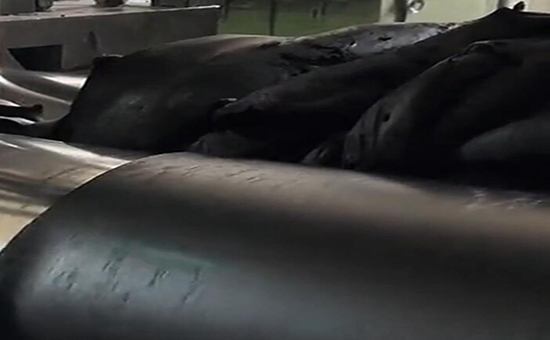
When using nitrile rubber and nitrile reclaimed rubber together, it is recommended to use a segmented mixing process, with thin tubes sealed into triangular bags to ensure uniform dispersion of the reclaimed rubber and avoid uneven local vulcanization. When vulcanizing the nitrile reclaimed rubber shock absorber sleeve, the addition of reclaimed rubber slightly accelerates the vulcanization rate, so the vulcanization temperature and time should be adjusted according to the crosslinking activity of the reclaimed rubber; In high-temperature summer environments, it is recommended to shorten the vulcanization time by 5%-10% to prevent over-sulfurization and degradation of the physical properties of the nitrile shock-absorbing cushioning bushing.
When using nitrile reclaimed rubber to reduce production costs for rubber shock absorbers, attention must also be paid to differences among batches to avoid quality fluctuations affecting the consistency of rubber shock absorber sleeves. A strict inspection system should be established, focusing on checking the Mooney viscosity, tensile strength, and acetone extract content of the reclaimed rubber to ensure that each batch meets the process window requirements.
Exclusive original article [commercial authorization] reprint, excerpt and excerpt in any form are prohibited without written authorization. Focus on Hongyun rubber: learn the process formula and raw material technology of producing rubber products from recycled rubber to help you reduce costs and increase profits