Nitrile reclaimed rubber is made from waste nitrile rubber and discarded nitrile rubber products. It retains the basic properties of nitrile rubber and can replace expensive virgin nitrile rubber. When used with polyvinyl chloride (PVC) to produce foam rubber products, it can reduce raw material costs while improving the oil resistance and processability of the rubber. When blending nitrile reclaimed rubber with PVC to prepare low-density foam materials, the key is whether the curing rate, foaming rate, and rubber viscosity can be coordinated within the same temperature range.
1. Blending ratio of nitrile reclaimed rubber and PVC for foam rubber products
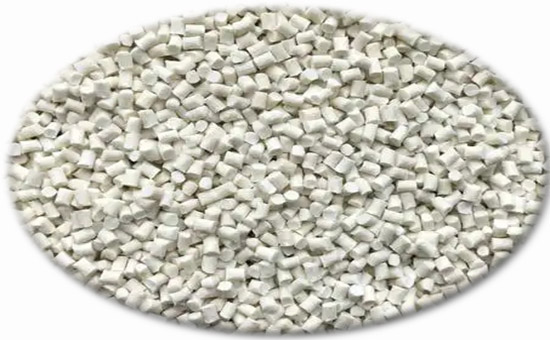
When producing sponge foam rubber products by blending nitrile reclaimed rubber with PVC, the R-NBR/PVC blending ratio can be adjusted based on oil resistance, hardness, elasticity, cost, and foaming expansion; using nitrile reclaimed rubber as the main material, a 70/30 blend with PVC can improve oil resistance, dimensional stability, and material rigidity. The Mooney viscosity and plasticity of nitrile reclaimed rubber affect the quality of the R-NBR/PVC blend.
When using R-NBR/PVC blends to make foam rubber products, it is recommended to choose nitrile reclaimed rubber with high nitrile content, fine particle size, no impurities, and moderate Mooney viscosity, and to control performance differences among different batches.
2. Curing and foaming system design for R-NBR/PVC foam rubber products
When preparing sponge foam rubber products from R-NBR/PVC blends, the core is matching the curing reaction with the decomposition of the AC foaming agent. If the foaming agent decomposes significantly before the rubber has enough network structure, the gas can easily escape, resulting in incomplete cells, surface collapse, or insufficient density reduction.
It is recommended to use a sulfur-accelerator system for R-NBR/PVC blends, with fast-curing accelerators like EZ, TMTD, M, or D to increase the curing speed. The amount of sulfur, accelerator, and R-NBR/PVC ratio affect the foaming result. A low-sulfur, high-accelerator curing system is easier to achieve good foaming compared to a conventional sulfur curing system. The common organic foaming agent AC has a high decomposition temperature; in R-NBR/PVC foam formulations, its decomposition behavior can be adjusted with activator systems such as zinc oxide and metallic stearates.
3. Key production process points for R-NBR/PVC foam rubber products
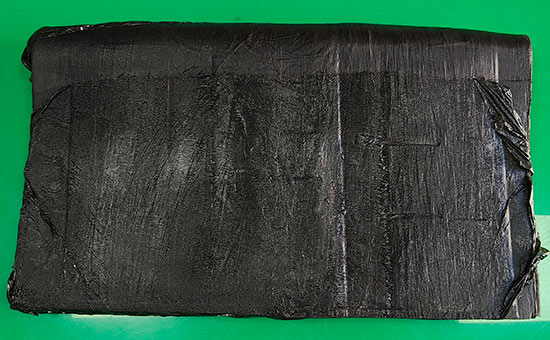
High curing temperatures can cause high density in R-NBR/PVC sponge foam rubbers. It is recommended to pre-treat the R-NBR/PVC mixed rubber at 105-130°C for 10-30 minutes to gradually start the curing reaction and develop some structural strength. Then, enter the foaming-curing stage at 150-160°C, where AC begins to decompose and generate gas. By this time, the rubber has sufficient gas-holding ability, allowing stable cells to form.
In practice, properly blending nitrile reclaimed rubber with PVC can reduce the amount of virgin nitrile rubber used, lowering costs. This approach is widely used in insulated rubber-plastic materials, foam rubber shoe soles, sponge sealing strips, and foam boards. By evaluating density, compression set, hardness, oil resistance, and dimensional stability together, if necessary, a ternary blend of nitrile rubber, nitrile reclaimed rubber, and PVC can meet the performance requirements of more sponge rubber products.
Exclusive original article [commercial authorization] reprint, excerpt and excerpt in any form are prohibited without written authorization. Focus on Hongyun rubber: learn the process formula and raw material technology of producing rubber products from recycled rubber to help you reduce costs and increase profits