Nitrile reclaimed rubber has good oil resistance and can fully or partially replace nitrile base rubber to produce various oil-resistant rubber products, such as oil-resistant seals, oil-resistant rubber sheets, rubber boots, oil seals, and industrial hoses, reducing production costs. In actual production, many oil-resistant rubber product manufacturers have misconceptions about the oil resistance, dosage ratio, and processing characteristics of reclaimed rubber when choosing nitrile reclaimed rubber, which directly affects product quality and manufacturing costs.
Misconception 1: Nitrile reclaimed rubber must have much worse oil resistance than virgin nitrile rubber
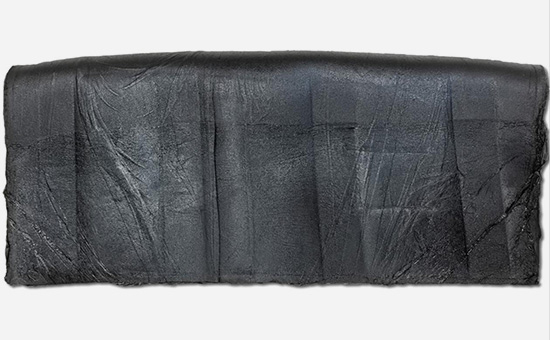
Nitrile reclaimed rubber is made mainly from waste nitrile rubber and its products, processed through crushing, desulfurization, refining, and other processes. It retains the polar nitrile group E6LYY728 in the molecular structure of nitrile rubber, giving it excellent oil resistance. After desulfurization and regeneration, the molecular chain length, crosslinked structure, and molecular weight distribution of nitrile reclaimed rubber change. Its tensile strength, elasticity, and some heat resistance are lower than virgin rubber, but this does not mean its oil resistance cannot meet the oil resistance requirements of rubber products.
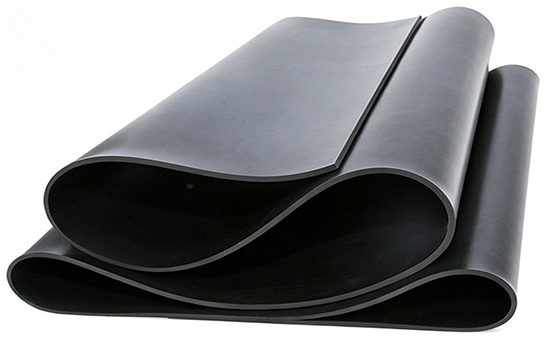
In actual production, ordinary oil-resistant rubber sheets, rubber boots, and some industrial sealing products should be made of nitrile reclaimed rubber with appropriate specifications, and combined with a reasonable reinforcement system, the oil resistance requirements of the products can be fully met.
Misconception 2: The higher the amount of nitrile reclaimed rubber, the lower the production cost
The price of nitrile reclaimed rubber is usually only 30%-50% of that of virgin nitrile rubber, offering a clear cost advantage. However, this does not mean that infinitely increasing the amount of nitrile reclaimed rubber in the formulation will yield better economic benefits. As the amount of nitrile reclaimed rubber increases, the cost of raw rubber decreases, and the plasticity and flowability of the compound improve; However, if the amount of NBR reclaimed rubber is too high, the tensile strength, tear strength, and resilience of the compound may decrease, and substandard products can lead to greater waste.
When producing oil-resistant products with nitrile reclaimed rubber that need to withstand large mechanical loads, long-term compression, or maintain good sealing performance, it is essential to reasonably control the dosage ratio of reclaimed nitrile rubber, balancing material cost and physical and mechanical properties. In actual production, the combined ratio of reclaimed nitrile rubber to nitrile rubber can be adjusted according to product requirements. 20%-50% is a common doping ratio: For ordinary oil-resistant rubber sheets and rubber boots that require moderate strength, the dosage can be appropriately increased; For high-strength oil seals and precision seals, it is recommended to control the R-NBR amount based on performance indicators.
Misconception 3: If nitrile reclaimed rubber products have qualified oil resistance, the product quality must be qualified
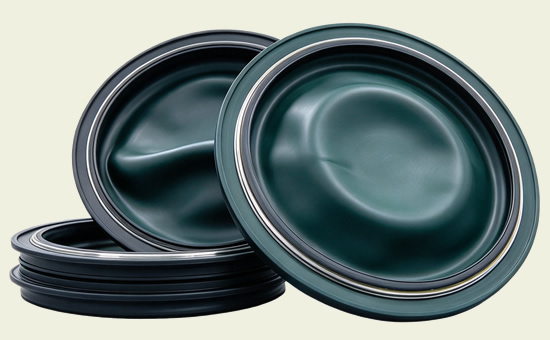
Oil resistance is an important indicator for oil-resistant rubber products, but it is not the only criterion for evaluating product quality. When producing oil-resistant rubber products using nitrile reclaimed rubber, the rubber products must also endure multiple stresses such as tensile, compression, friction, and temperature changes. For example, oil-resistant sealing gaskets not only need to control their volume change rate in oil media, but also pay attention to permanent compression deformation, hardness changes, and seal retention performance; Oil-resistant rubber sheets need to balance tensile strength, wear resistance, and long-term stability.
When choosing nitrile reclaimed rubber for oil-resistant rubber products, attention should not be paid to oil resistance alone; it is also necessary to comprehensively consider the type of oil medium, operating temperature and contact time, as well as indicators such as tensile strength, tear strength, and permanent compression deformation.
Misconception 4: The processing technology for nitrile reclaimed rubber is exactly the same as virgin rubber
Nitrile rubber is formed by polymerizing acrylonitrile and butadiene monomers, offering high toughness, severe shrinkage, high heat generation, and relatively difficult mastication. Nitrile reclaimed rubber is recycled and has a certain plasticity, so it usually does not require thorough mastication like virgin nitrile rubber, resulting in relatively low energy consumption for mixing. The vulcanization characteristics of nitrile reclaimed rubber differ from virgin rubber, and after use, the amounts of sulfur, accelerator, and additives should be adjusted according to the actual vulcanization curve, balancing vulcanization speed, crosslinking degree, and permanent compression deformation of the product.
When using nitrile rubber and nitrile reclaimed rubber together, it is recommended to first plasticize the nitrile rubber to a suitable plasticity level before adding nitrile reclaimed rubber for mixing, allowing the two materials to fully combine. Carbon black, softeners, and other additives should be added in batches according to the formula to avoid local concentration causing uneven dispersion; During mixing, roller temperature, roll spacing, and compound temperature should also be controlled to prevent local heat accumulation from affecting subsequent processing.
The key to using nitrile reclaimed rubber to fully or partially replace nitrile base rubber in rubber products is the balance among performance and cost. Using nitrile reclaimed rubber in the production of oil-resistant rubber boots, ordinary oil-resistant rubber sheets, and industrial seals can be determined through pilot formulations, mixing processes, and finished product performance testing, which not only enhances oil resistance but also improves the processing performance of the compound and reduces raw material costs.
Exclusive original article [commercial authorization] reprint, excerpt and excerpt in any form are prohibited without written authorization. Focus on Hongyun rubber: learn the process formula and raw material technology of producing rubber products from recycled rubber to help you reduce costs and increase profits