Nitrile reclaimed rubber is processed from nitrile machine head rubber, sub-brand nitrile rubber, and used nitrile gloves as raw materials. It retains the basic performance characteristics of nitrile rubber, with good oil resistance, heat resistance, and wear resistance. It can fully or partially replace nitrile original rubber in producing various oil-resistant molded miscellaneous parts, effectively reducing raw material costs; Determine the type and dosage of nitrile reclaimed rubber based on the working medium, stress condition, operating temperature, and structural characteristics of the parts, appropriately adjust the formula, and reduce costs while ensuring the performance of oil-resistant miscellaneous parts.
1. Tips for selecting nitrile reclaimed rubber for oil-resistant mold compression miscellaneous parts
There are many types of oil-resistant rubber molded miscellaneous parts, and the performance requirements for rubber parts vary significantly depending on the application. It is necessary to select the appropriate type of reclaimed nitrile rubber based on actual needs. For example, oil pump accessories usually need to come into contact with lubricating oil, hydraulic oil, or other oil-based media. When selecting materials, focus should be placed on the compound's oil resistance, tensile strength, hardness, and volume change rate; For parts that need to withstand certain pressure or maintain dimensional stability, high-strength nitrile reclaimed rubber can be chosen, combined with an appropriate amount of original nitrile rubber to improve overall mechanical properties.
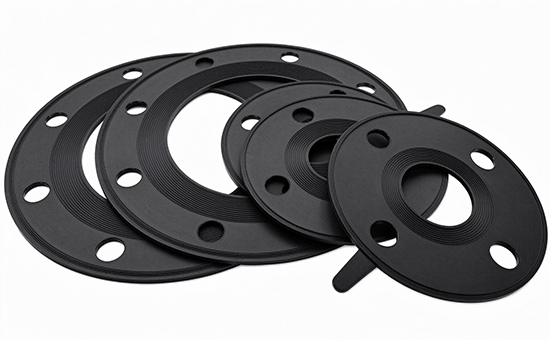
2. Key points for formula design for oil-resistant molded and compressed miscellaneous parts produced with nitrile reclaimed rubber
When producing oil-resistant molded and compressed miscellaneous parts using nitrile reclaimed rubber as the main raw material, the formulation design must balance oil resistance, physical and mechanical properties, and processability; For parts requiring high strength, oil resistance, and dimensional stability, the proportion of nitrile virgin rubber can be appropriately increased; For ordinary oil-resistant rubber miscellaneous parts, the amount of nitrile reclaimed rubber can be increased according to actual usage conditions.
Among the formulations of oil-resistant pressed miscellaneous parts of nitrile reclaimed rubber, carbon black is the most commonly used reinforcement, with varieties adjusted according to hardness, strength, and processing requirements; For softeners, it is recommended to choose additives that are compatible with nitrile compounds to avoid excessive low-molecular-weight softening components affecting oil resistance, such as dibutyl phthalate (DBP), dioctyl phthalate (DOP), liquid nitrile, etc.; The vulcanization system is determined based on the vulcanization characteristics of nitrile reclaimed rubber, the ratio of raw rubber used together, and product thickness. Adjust the amounts of accelerators and sulfur reasonably to ensure the compound has an appropriate vulcanization rate and crosslinking degree.
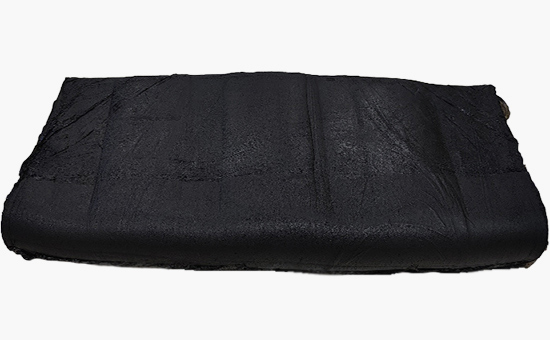
3. Key points of the production process for oil-resistant molded miscellaneous parts produced by nitrile reclaimed rubber
(1) Mixing: When producing oil-resistant rubber miscellaneous parts using nitrile reclaimed rubber, the core of mixing is low temperature and segmented feeding to prevent burns. It is recommended to use low-temperature mixing throughout, with the roller temperature of the open mill kept below 60°C. The mixing machine should also avoid excessive heat generation E6LYY7817 to prevent early burning; When used together with nitrile original rubber: first fully plasticize the nitrile rubber, then mix with nitrile reclaimed rubber; do not mix directly together; After mixing and removing the sheets, it is recommended to let it stand for more than 12 hours before hot refining and cutting to form the sheets, allowing the compounder to fully disperse and facilitate gas venting.
(2) Vulcanization: When using molded vulcanization for oil-resistant pressed miscellaneous parts of nitrile reclaimed rubber, the vulcanization temperature is commonly 150–170°C; for thick products, low temperature is used for extended periods; for thin products, high temperatures can be used for short periods; Vulcanization time is adjusted according to product thickness, generally 10–30 minutes; for thick products, it is appropriately extended to prevent internal under-sulfurization; Vulcanization pressure is 1.4-3.4MPa to ensure the compound fills the mold and releases air bubbles.
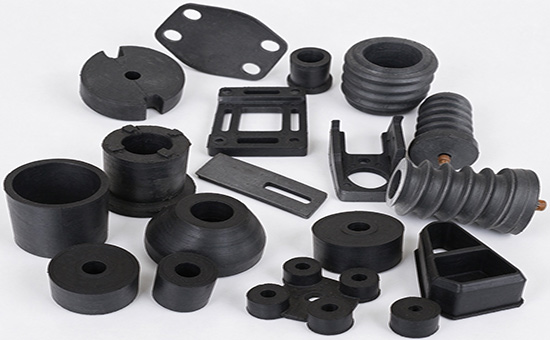
When producing oil-resistant rubber miscellaneous parts using nitrile reclaimed rubber, it is not enough to only test tensile strength at room temperature; oil resistance tests must also be conducted under actual working conditions, focusing on changes in mass, volume, hardness, and mechanical properties before and after immersion. For oil pump accessories, special attention should be paid to sealing performance and dimensional stability; For equipment buffer parts, attention should be paid to permanent deformation and dynamic fatigue performance under compression.
Different types of oil-resistant molded and compressed impurities must be selected according to the contact medium, operating temperature, load, and service life requirements. The ratio and combination system of reclaimed rubber must be reasonably determined, and mixing and vulcanization processes adjusted as needed to fully realize the application value of nitrile reclaimed rubber. This ensures that products meet usage requirements while achieving more reasonable production cost control.
Exclusive original article [commercial authorization] reprint, excerpt and excerpt in any form are prohibited without written authorization. Focus on Hongyun rubber: learn the process formula and raw material technology of producing rubber products from recycled rubber to help you reduce costs and increase profits