Sulfur is the most commonly used vulcanizing agent in the production of recycled rubber products. Vulcanized recycled rubber exhibits high tensile strength, great elasticity, good fatigue resistance, and excellent dynamic and static mechanical properties. However, when the amount of sulfur in recycled rubber product formulations is relatively high, blooming easily occurs, so insoluble sulfur is often used. When using insoluble sulfur in the recycled rubber vulcanization system, the feeding temperature must not exceed 80-90°C. Why is this?
1. What is insoluble sulfur? What are the advantages of using insoluble sulfur in recycled rubber products?
Insoluble sulfur is an allotrope of ordinary sulfur, produced by the thermal polymerization of orthorhombic sulfur. It does not bloom easily, is not prone to scorching, and is insoluble in carbon disulfide. Using insoluble sulfur in formulations with relatively high sulfur content allows it to exist in a dispersed state, effectively preventing sulfur aggregation, reducing the tendency for scorching during storage, avoiding blooming, and providing good adhesion.
2. Why must the feeding temperature of insoluble sulfur not exceed 80-90°C?
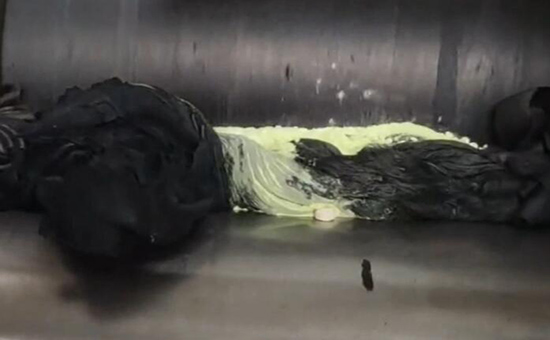
Insoluble sulfur products generally contain a small amount of stabilizer. After stabilization, the outer electrons of the sulfur atoms at both ends reach eight, forming a stable structure that inhibits the rate of sulfur chain breakage and delays conversion to soluble sulfur. However, insoluble sulfur is still a metastable substance and tends to revert to low-molecular soluble sulfur (ordinary sulfur). During recycled rubber mixing, when the temperature exceeds 80-90°C, insoluble sulfur converts to ordinary sulfur and loses its insoluble characteristics; therefore, the feeding temperature must be controlled and must not exceed 90°C.
3. Precautions for using insoluble sulfur in recycled rubber vulcanization:
(1) Pay attention to processing temperature: Insoluble sulfur can be added directly to the rubber during mixing and can be added on an internal mixer, but it should be added under the condition that the temperature before discharging the rubber is below 90°C.
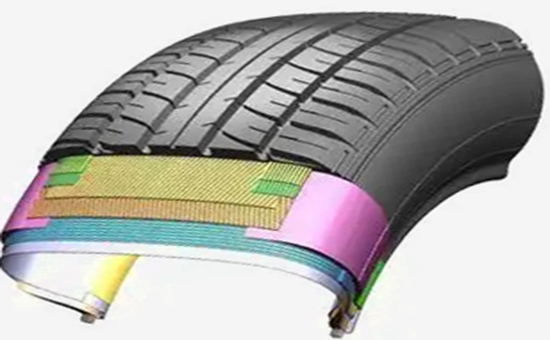
(2) Pay attention to storage environment: During storage, insoluble sulfur can convert to ordinary sulfur when exposed to amines and alkaline substances at any temperature; it must not be stored near products that release free amines (such as sulfenamide accelerators and vulcanizing agent sulfur DTDM).
In the production of recycled rubber products, should ordinary sulfur powder or insoluble sulfur be used? Rubber product manufacturers can decide based on product performance requirements and the amount of sulfur needed.
Exclusive original article [commercial authorization] reprint, excerpt and excerpt in any form are prohibited without written authorization. Focus on Hongyun rubber: learn the process formula and raw material technology of producing rubber products from recycled rubber to help you reduce costs and increase profits