When producing rubber products with reclaimed rubber, carbon black is the most commonly used reinforcing agent. The physical and mechanical properties of products made from reclaimed rubber mainly rely on carbon black for adjustment. The chemical activity, particle size, structure, and surface chemistry of carbon black directly determine its ability to bond with the reclaimed rubber matrix: highly chemically active carbon black can compensate for broken molecular chains in reclaimed rubber and form a denser network through interfacial crosslinking; finer particles with suitable structure can improve tensile strength, wear resistance, and aging resistance of reclaimed rubber products, while differences in surface acidity/basicity can further affect the vulcanization rate and processing safety of reclaimed rubber.
1. Effect of Carbon Black Activity on Reclaimed Rubber Properties
When reclaimed rubber products are reinforced with carbon black, higher chemical activity means better reinforcement. Highly active carbon black has more active sites on its surface, which, during mixing and vulcanization, can crosslink with reclaimed rubber molecules to form more 3D network structures. The higher the chemical activity, the more bound rubber is formed during mixing, increasing the Mooney viscosity. During extrusion, expansion and semi-finished product shrinkage are greater, extrusion speed is slower, and the resulting vulcanized reclaimed rubber has higher tensile strength, tear strength, and wear resistance.
2. Effect of Carbon Black Particle Size on Reclaimed Rubber Properties
Active sites exist on the surface of carbon black, and the smaller the particle size (i.e., the larger the specific surface area), the more active sites per unit mass, forming more bound rubber and enhancing reinforcement. Smaller particle size leads to higher tensile strength, tear strength, stress at a specific elongation, wear resistance, and hardness in vulcanized reclaimed rubber, with good flex cracking resistance, while rebound and elongation at break decrease. However, if the particle size is too small, strong particle cohesion can lead to agglomeration, making dispersion difficult, reducing plasticity, and worsening extrusion performance.
3. Effect of Carbon Black Structure on Reclaimed Rubber Properties
High-structure carbon black has complex aggregate shapes with many branches and large internal voids. When mixed with reclaimed rubber, it forms more occluded rubber. These aggregates can restrict deformation of trapped rubber chains, significantly improving stress at a given elongation and hardness. Moreover, occluded rubber improves carbon black dispersibility during mixing and extrusion performance, reducing extrusion expansion and shrinkage, while semi-finished products have good stiffness and smooth surfaces.
4. Effect of Carbon Black Surface Roughness on Reclaimed Rubber Properties
With the same particle size, reducing surface roughness prevents reclaimed rubber molecules from entering nanoscale pores on carbon black, reducing effective surface area for interaction and lowering reinforcement, including tensile strength, stress at a given elongation, wear resistance, and fatigue crack resistance. Processability is also reduced. On the other hand, rebound, elongation at break, and tear resistance improve.
5. Effect of Carbon Black Surface Acidity/Basicity on Reclaimed Rubber Properties
As a reinforcing agent, the surface acidity or basicity of carbon black directly affects vulcanization. Acidic channel carbon black delays curing, reducing the risk of scorching. Alkaline furnace black or thermal black accelerates vulcanization, and excessive use of furnace black can cause scorching, which needs special attention.
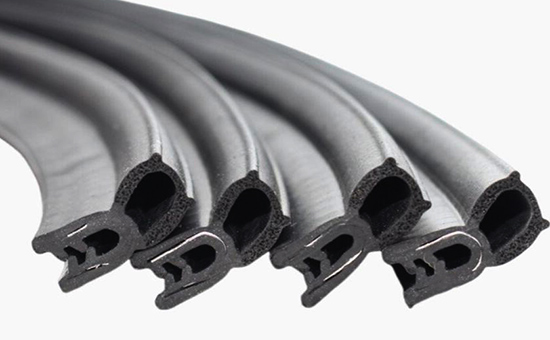
When using reclaimed rubber as the main raw material for rubber products, different kinds of carbon black have varying reinforcement effects. It’s important to choose the right type based on physical and mechanical property requirements and cost, and to reasonably determine the amount of carbon black, which can reduce costs while further optimizing overall reclaimed rubber product performance.
Exclusive original article [commercial authorization] reprint, excerpt and excerpt in any form are prohibited without written authorization. Focus on Hongyun rubber: learn the process formula and raw material technology of producing rubber products from recycled rubber to help you reduce costs and increase profits