Reclaimed tire rubber is processed from waste tire rubber powder, retaining the basic properties of rubber, and possesses certain elasticity, wear resistance, and processing properties. It can be directly used in rubber gasket production to reduce production costs. Ordinary rubber gaskets are widely used in machinery, pipeline connections, hardware fittings, and general industrial sealing parts, mainly serving to provide isolation, dust protection, waterproofing, and cushioning. When producing rubber gaskets entirely from tire reclaimed rubber, the following issues should be noted.
1. Key points for choosing materials for ordinary rubber gaskets produced by tire reclaimed rubber
Ordinary rubber gaskets require the compound to have certain flexibility, compression resilience, and dimensional stability, with low tensile strength requirements, and can be fully used with tire reclaimed rubber; If the rubber gasket needs to endure E6LYY818 large compressive loads for a long time, the hardness, permanent compression set, and resilience of the tire reclaimed rubber after vulcanization must be considered, and tire tread reclaimed rubber is recommended. When producing ordinary rubber gaskets using tire reclaimed rubber, it is recommended to choose tire reclaimed rubber with appropriate specifications based on the appearance requirements, operating environment, and physical and mechanical performance requirements, focusing on the fineness, plasticity, tensile strength, impurity content, and batch stability of the reclaimed rubber.
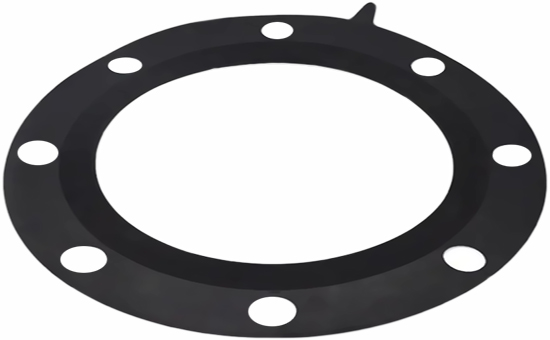
2. Key points for formula design of ordinary rubber gaskets for all-tire reclaimed rubber production
Ordinary rubber gaskets are low-strength, low-cost, static sealing products that can be fully used with tire reclaimed rubber. The key is to balance reinforcement, softening, and vulcanization.
(1) Vulcanization system: When producing ordinary rubber gaskets for tire reclaimed rubber, sulfur vulcanization is most commonly used, mainly with polysulfur bonds. Reclaimed rubber vulcanized rubber has good comprehensive mechanical strength and dynamic fatigue performance; Based on the vulcanization characteristics of tire reclaimed rubber, the amounts of sulfur, accelerators, and activators should be reasonably determined to control scorch safety, vulcanization speed, and crosslinking degree to avoid under-sulfurization or over-sulfurization affecting gasket performance.
(2) Reinforcement and filling system: Carbon black reinforcement is used to effectively improve the tensile strength, wear resistance, and hardness of tire reclaimed rubber vulcanized rubber.Choose the appropriate type and amount of carbon black based on the target hardness, and not rely solely on increasing carbon black to improve hardness; Light and heavy calcium fillers are used at lower prices and are suitable for reducing formulation costs.
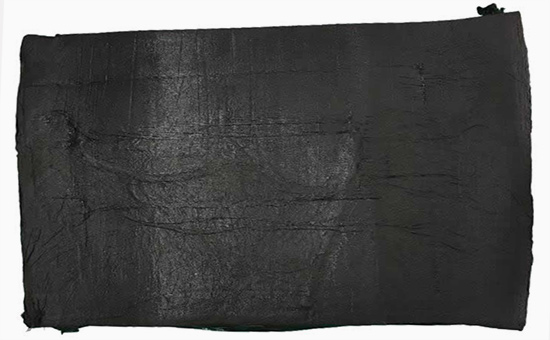
(3) Softening system: commonly use coumaron resin, naphthene oil, etc., to improve the mixing dispersion and processing fluidity of full tire reclaimed rubber.
3. Reference formula for producing ordinary rubber gaskets with full tire reclaimed rubber
Tire reclaimed rubber 100 parts, zinc oxide 3 parts, stearic acid 1 part, anti-aging agent RD 1 part, carbon black N660 10 parts, heavy calcium 50 parts, accelerator M 0.3 parts, sulfur 1.5 parts; Total: 166.8 parts.
4. Key points of mixing and forming processes for producing ordinary rubber gaskets from full tire reclaimed rubber
When producing rubber gaskets mainly from tire reclaimed rubber, the quality of the compound directly affects the processing performance and product consistency of the compound. It is recommended to choose an appropriate mixing process based on equipment conditions, using segmented mixing methods to fully plasticize the tire reclaimed rubber to evenly disperse carbon black and filler, then add it to the vulcanization system. Accelerators and sulfur should be added at lower rubber temperatures to reduce the risk of scorching during mixing; After mixing, let the mixture rest for a period of time to further disperse the compounders evenly.
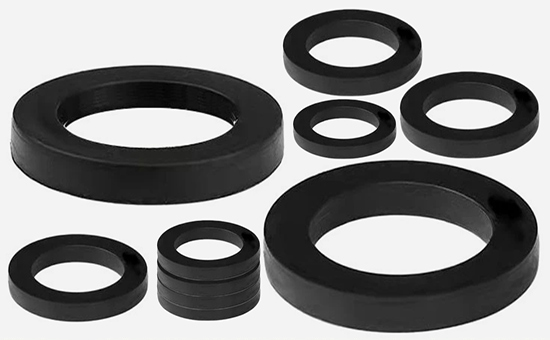
The most commonly used form for tire reclaimed rubber gaskets is compression molding, which can determine temperature, pressure, and time by combining gasket thickness, mold structure, and rubber vulcanization characteristics; When producing thinner rubber gaskets, attention must be paid to cavity venting and compound flow to ensure the compound fully fills the cavity and reduce defects such as missing gum, bubbles, and edge defects.
When producing ordinary rubber gaskets using reclaimed tire rubber, the key is not to simply increase filler or reduce raw material costs, but to determine performance indicators based on operating conditions, and through formula and process coordination, achieve stable cost reduction while meeting sealing requirements; It is recommended that manufacturers establish incoming inspection and batch formula management systems for tire reclaimed rubber to control the impact of raw material fluctuations on product quality.
Exclusive original article [commercial authorization] reprint, excerpt and excerpt in any form are prohibited without written authorization. Focus on Hongyun rubber: learn the process formula and raw material technology of producing rubber products from recycled rubber to help you reduce costs and increase profits