Ultra-fine tire reclaimed rubber is made from 80-mesh tire rubber powder and processed through crushing, magnetic separation, desulfurization filtration, and refining and molding processes. It has good compatibility with natural rubber and general synthetic rubber, can replace a certain proportion of raw rubber to produce various types of rubber hoses, effectively reducing raw material costs, and some products can even use tire reclaimed rubber exclusively. When producing rubber hoses with ultra-fine tire reclaimed rubber, the selection, blending ratio, formulation, and processing technology all affect the performance of the finished product and production costs.
1. Tips for selecting reclaimed rubber for ultra-fine tires for rubber hoses
To reduce costs by blending tire reclaimed rubber in rubber hose production, it is essential to pay attention to indicators such as tensile strength, fineness, ash content, and Mooney viscosity. Generally, the tensile strength of tire reclaimed rubber directly affects the durability of rubber hoses; The finer the fineness and the lower the impurity content, the better the dispersion in the compound and the more stable the surface quality of the extruded rubber hose; The lower the ash content, the higher the effective rubber hydrocarbon content, and the better the overall indicators of ultrafine tire reclaimed rubber; Mooney viscosity affects the feed feeding efficiency and extrusion appearance of reclaimed rubber mixing.
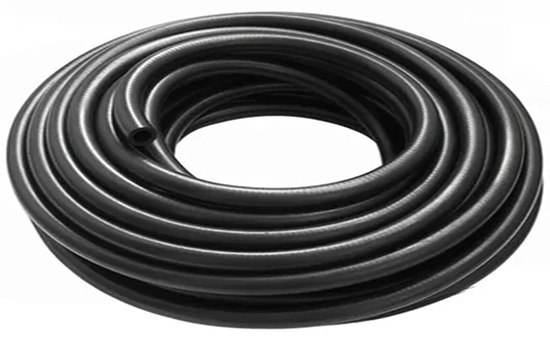
For black rubber hoses that need to be labeled on the surface, it is recommended to choose non-migrating ultra-fine tire reclaimed rubber to avoid yellowing and discoloration.
2. How much ultrafine tire reclaimed rubber is suitable for rubber hoses?
When reducing costs by adding ultra-fine tire reclaimed rubber to rubber hoses, the proportion of reclaimed rubber should be determined based on the hose's purpose, working pressure, rubber layer structure, type of raw rubber E6LYY7812 and reclaimed rubber indicators. Small trial ratios can gradually increase the amount of ultrafine tire reclaimed rubber, which can reduce production costs while meeting requirements for tensile strength, elongation, and aging resistance. The dosage ratio of ultrafine tire reclaimed rubber in the inner rubber layer of rubber hoses is generally 20%-50%, outer layer 30%-60%, pure rubber hoses 30%-70%, and some products can use tire reclaimed rubber exclusively.
3. Key points for formula design for rubber hoses mixed with ultrafine tire reclaimed rubber
When using reclaimed rubber for ultrafine tires in rubber hose production, the additive system must match the type of raw rubber and product performance requirements.
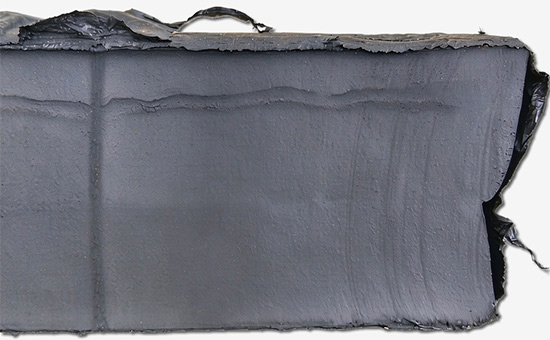
(1) Reinforcement and Filling System: Carbon black reinforcement and calcium carbonate filling can be chosen. Reasonably select the type and amount of carbon black, balancing reinforcement effect, rubber flowability, and extrusion performance. It is not enough to simply increase reinforcing agents to compensate for the strength loss caused by adding tire reclaimed rubber.
(2) Vulcanization System: Sulfur-accelerator system, adjusting the types and amounts of vulcanizing agents and accelerators according to the vulcanization characteristics of raw rubber and ultrafine tire reclaimed rubber; It is recommended to determine the positive vulcanization time using the vulcanization curve before formal production to avoid undersulfur or over-sulfur affecting the hose's overall performance.
(3) Softening and plasticizing system: commonly used heavy oil, engine oil, aromatic oil, and asphalt, used together with solid softeners such as coumalong, rosin, petroleum resin, to improve the flowability, viscosity, and rolling extrusion process of the compound; Control the amount of softener to avoid excessive amounts that reduce the elongation stress and tensile strength of the compound, which could affect the bonding performance among the rubber tube and the frame material.
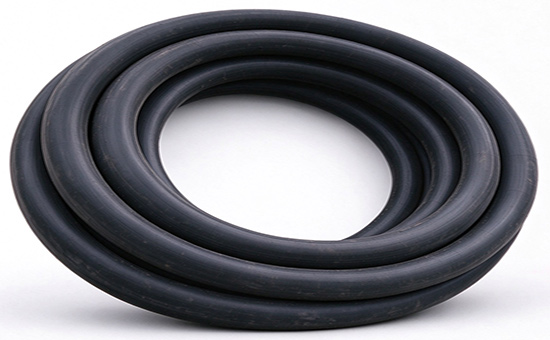
4. Key production process points for rubber hoses mixed with ultrafine tire reclaimed rubber
(1) Mixing: When using only ultra-fine tire reclaimed rubber or reclaimed rubber combined with other rubbers to produce rubber hoses, the mixing process must combine production equipment and formula to determine the feeding sequence, mixing temperature, and discharge temperature to ensure full fusion of reclaimed rubber and raw rubber and avoid uneven dispersion; Accelerators and sulfur are usually added at low temperatures in the later stage to reduce the risk of scorch.
(2) Vulcanization: When rubber hoses are mixed with ultra-fine tire reclaimed rubber, temperature and time must be determined based on hose specifications, rubber layer thickness, and vulcanization equipment; For hoses with fiber or steel wire frameworks, the bonding effect among the inner and outer rubber layers and the skeleton material must be comprehensively considered.
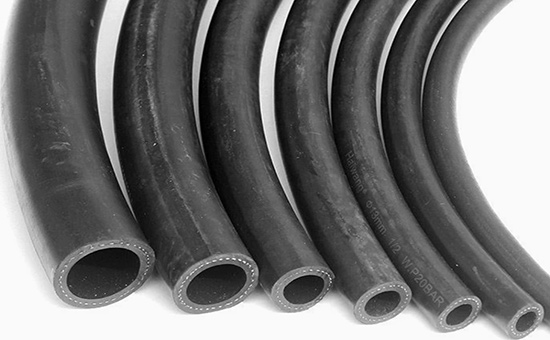
Compared with ordinary tire reclaimed rubber, ultra-fine tire reclaimed rubber has higher fineness and better dispersion performance, but its molecular chain structure has changed to some extent and cannot be fully replaced by the performance of the base rubber. Rubber hose manufacturers must determine the type of reclaimed rubber based on the hose's purpose, working pressure, rubber layer structure, and type of raw rubber, appropriately adjust production formulas and process parameters, and reduce raw material costs and production energy consumption while meeting the performance requirements of rubber hoses.
Exclusive original article [commercial authorization] reprint, excerpt and excerpt in any form are prohibited without written authorization. Focus on Hongyun rubber: learn the process formula and raw material technology of producing rubber products from recycled rubber to help you reduce costs and increase profits