Rubber anti-collision strips can cushion collisions, reduce impact, and protect contact surfaces. They are widely used in building corners, vehicle edges, mechanical equipment, and various protective parts of various facilities, requiring elastic recovery, tear resistance, aging resistance, and firm installation. Recycled tire rubber is processed from waste tire rubber powder, mainly composed of natural rubber, universal synthetic rubber, and carbon black, and can be used as the main raw material for producing rubber anti-collision strips.
1. Advantages of using recycled tire rubber for rubber bumper strips
The biggest advantage of producing rubber bumper strips using recycled tire rubber as the main raw material is low cost, with the specific advantages as follows.
(1) The price of tire reclaimed rubber is much lower than that of natural rubber and styrene-nidile rubber. Replacing high-priced virgin rubber to produce bumper strips can significantly reduce production costs and enhance market competitiveness. (2) Tire reclaimed rubber contains carbon black components, which have good wear resistance and tear resistance, meeting the basic impact protection requirements of bumper strips. (3) Tire reclaimed rubber has good processing performance, low Mooney viscosity, good flowability, fast powder absorption during mixing, minimal heat generation, easy molding during extrusion/molding, low shrinkage, and more stable bumper strip size. (4) Reclaimed rubber has good vulcanization flatness, making it less prone to oversulfuring and brittleness.
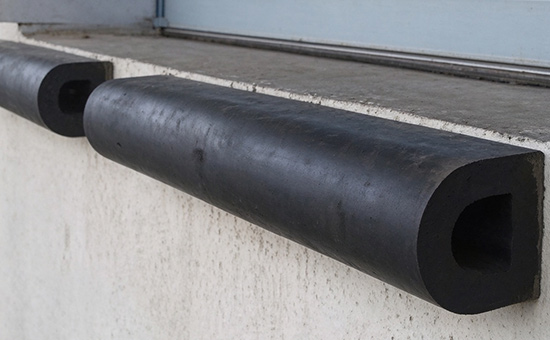
2. Tips for choosing reclaimed rubber for rubber bumper strips
When producing rubber bumper strips using reclaimed tire rubber, it is necessary to choose suitable reclaimed rubber based on the specific usage scenario and performance requirements. Products with higher impact resistance requirements E6LYY793 use high-strength tire tread reclaimed rubber. For indoor anti-collision strips, it is recommended to choose environmentally friendly tire reclaimed rubber certified by RoHS. It is recommended to randomly inspect each batch of reclaimed tire rubber, including Mooney viscosity, ash content, tensile strength, and elongation at break; Stack different batches in batches and mix materials accordingly; do not mix batches; Key orders can be tested on small scales.
3. Key points for formula design of rubber anti-collision strips for tire reclaimed rubber production
Recycled rubber bumper strips can be formulated to adjust the elasticity, hardness, tensile strength, and wear resistance of the compound to meet the performance requirements of different usage scenarios.
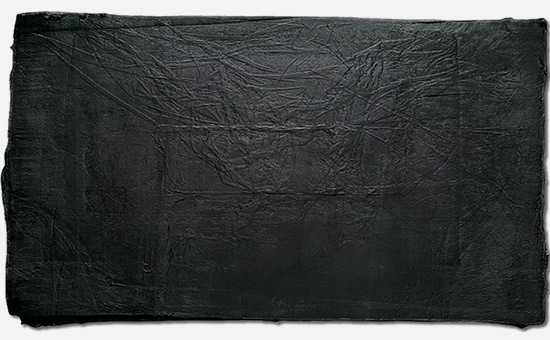
Design the formula for tire reclaimed rubber anti-collision strips, prioritizing low-sulfur formulations, using accelerators CZ, NS, or TMTD combined with sulfur; Reinforcing fillers can be N330 or N550; if hardness is insufficient, the amount of reinforcing agent can be appropriately increased; Control the amount of softening agent, otherwise it will become sticky, deformed, and have reduced aging resistance; When using release agents, pay attention to their compatibility with compounds; excessive amounts may cause surface cracking; Soft anti-collision strips can be mixed with small amounts of natural rubber or latex reclaimed rubber to improve the plastic's flexibility; For long-term outdoor use, add sufficient anti-aging agents (such as 4020, RD) and anti-ozone wax.
4. Key points for processing rubber anti-collision strips produced by tire reclaimed rubber
(1) Mixing: Use tire reclaimed rubber as the main raw material to produce rubber anti-collision strips. During mixing, ensure uniform dispersion: before feeding, the tire reclaimed rubber is hot-tempered until the rollers are smooth; Feeding is divided into two rounds of reclaimed rubber → carbon black→ softener → vulcanization system. Accelerators and sulfur are added when the adhesive temperature drops below 90°C to prevent residual active substances from causing scorch. In actual production, localized concentration of accelerators causes uneven supersulfur and hardness. Sulfur concentration causes surface sulfur spray, and carbon black particles are the tearing starting point. Three rounds of thin rolling, curling, and resting are more effective than extended mixing.
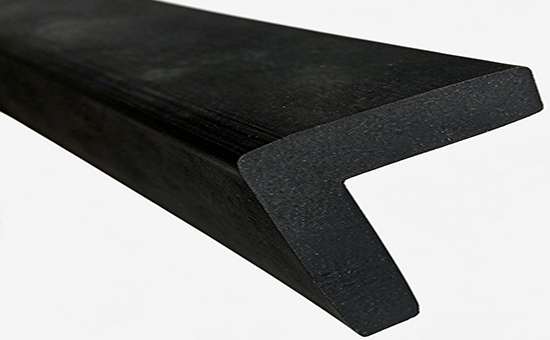
(2) Vulcanization: The cross-section of reclaimed rubber bumper strips has a certain thickness. During vulcanization, attention must be paid to the consistency of the degree of vulcanization among the inner and outer layers, and the vulcanization system and process parameters should be determined based on the characteristics of the reclaimed rubber. During molding vulcanization, the temperature is 130-155°C, and the vulcanization time increases with thickness. It is recommended to choose low-temperature long-term vulcanization to avoid surface over-sulfurization and under-sulfur at the core. Internal vulcanization quality cannot be judged solely by surface condition; For continuous extrusion vulcanization, it is essential to match the expansion of the mouth shape and the traction speed.
Tire reclaimed rubber is suitable for producing dark or black rubber anti-collision strips, while colored anti-collision strips are recommended to use white reclaimed rubber; Different usage scenarios require different key indicators such as rebound rate, tear strength, aging resistance, and permanent deformation under compression. Manufacturers must choose tire reclaimed rubber according to specific needs, appropriately adjust rubber formulas and production process parameters to meet protection requirements in more usage scenarios, reduce production costs, and improve economic efficiency.
Exclusive original article [commercial authorization] reprint, excerpt and excerpt in any form are prohibited without written authorization. Focus on Hongyun rubber: learn the process formula and raw material technology of producing rubber products from recycled rubber to help you reduce costs and increase profits