Nitrile regenerated rubber has excellent oil resistance, good wear and heat resistance, and can be used alone or in combination with nitrile rubber to produce sponge rubber products. It can effectively reduce raw material costs while ensuring the performance and lifespan of sponge rubber products, and it is widely used in the automotive industry, machinery manufacturing, electronics, electrical appliances, building HVAC, and other fields. When producing sponge rubber products using nitrile regenerated rubber, the following issues need to be noted:
1. Balance among the vulcanization rate and foaming rate of nitrile regenerated rubber sponge rubber
When preparing sponge foamed rubber products primarily from nitrile regenerated rubber, the decomposition temperature and rate of the foaming agent should be roughly the same as the vulcanization temperature and rate of the curing agent. If the foaming agent decomposes faster than the vulcanization rate of nitrile regenerated rubber, the sponge rubber will have relatively large bubbles, and gases may escape, which is not conducive to rubber expansion. If the NBR regenerated rubber vulcanizes before the foaming agent decomposes, the pores cannot expand uniformly, resulting in small and uneven pores.
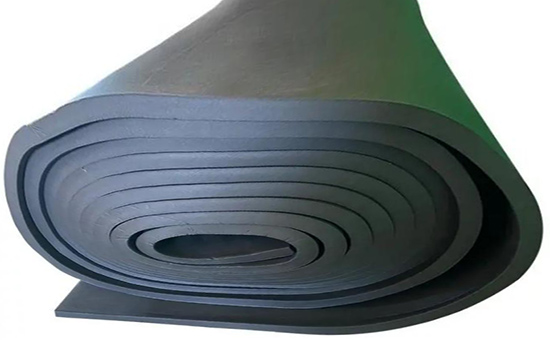
In addition, the decomposition of the foaming agent is an exothermic reaction, and the released heat accelerates vulcanization. Therefore, it is very important that the temperature and speed coordination of nitrile regenerated rubber during vulcanization and foaming is appropriate.
2. Uniform plasticity of nitrile rubber and nitrile regenerated rubber
When using nitrile regenerated rubber or a combination of nitrile rubber/nitrile regenerated rubber to produce sponge foamed rubber products, the raw rubber plasticity should remain uniform. Since storage time greatly affects the plasticity of E5LYY1023 mixed nitrile regenerated rubber, it is necessary to strictly control the plasticizing process. Especially when using nitrile rubber in combination with nitrile regenerated rubber, liquid nitrile rubber can be added as a processing aid if necessary, or methods such as combining it with PVC resin can be employed, which is conducive to preparing sponge rubber with evenly distributed pores and higher expansion rates.
3. Pre-processing treatment for nitrile regenerated rubber sponge rubber before molding
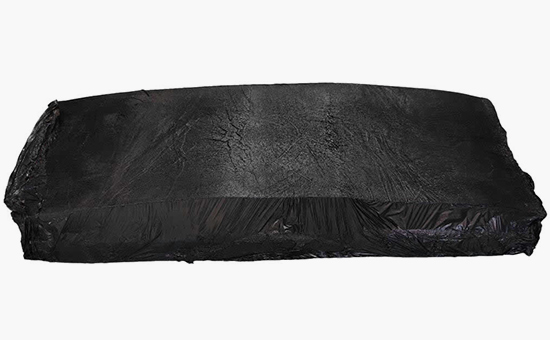
When preparing sponge rubber compounds from nitrile regenerated rubber, pre-processing of the rubber before molding is necessary. A thin film should be applied to the surface of semi-finished products. For sponge foamed rubber products with high-density, wear-resistant surface layers of nitrile regenerated rubber, the sponge compound containing the foaming agent can be made into films and sheets using a calender, and then molded using a laminating method.
To expel air generated during the expansion of nitrile regenerated rubber sponge, the inner surface of the mold should be coated with a release agent, and the surface of the regenerated rubber material should be dusted with powder. During molding, the deformation and flow of the nitrile regenerated rubber must be strictly controlled. Improper deformation or poor flow before filling the rubber into the mold will cause voids.
4. Key points for vulcanization of nitrile regenerated rubber sponge rubber products
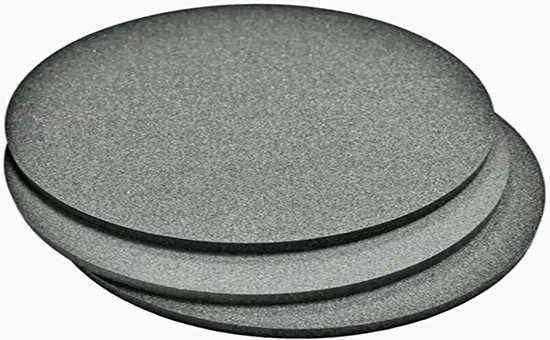
During the vulcanization process of nitrile regenerated rubber sponge rubber products, sponge rubber without specific pore requirements is generally vulcanized in an oven using hot air or in a vulcanization tank using direct steam. Nitrile regenerated rubber sponge sheets can be vulcanized using a flat plate vulcanizer. During vulcanization, a layer of cloth can be placed among the hot plate and the rubber to prevent air from escaping during sponge expansion. Pre-dusting with powder or spraying a layer of silicone oil as a release agent can prevent sticking among NBR regenerated rubber and cloth. During vulcanization, the upper plate temperature should be slightly higher than the lower plate temperature so that the rubber foams in the early stage of heat vulcanization and vulcanizes after filling the mold.
When producing sponge rubber products using nitrile regenerated rubber or a combination of nitrile rubber/nitrile regenerated rubber, manufacturers need to select nitrile regenerated rubber with suitable specifications according to the specific requirements of the sponge rubber, determine the appropriate regeneration rubber addition ratio, and appropriately adjust the rubber formulation and production process parameters. Later, we will share key points for formulation design of various sponge rubber products using nitrile regenerated rubber and cost-effective vulcanization formulations.
Exclusive original article [commercial authorization] reprint, excerpt and excerpt in any form are prohibited without written authorization. Focus on Hongyun rubber: learn the process formula and raw material technology of producing rubber products from recycled rubber to help you reduce costs and increase profits