Flange gaskets are commonly used sealing components at pipelines, valves, and equipment connections, mainly to reduce media leakage at connection interfaces; Flange gaskets that have long contact with oily media such as mineral oil and lubricants often use nitrile rubber, which is quite costly to produce. Nitrile reclaimed rubber is made from nitrile machine head rubber, sub-brand nitrile rubber, or waste nitrile rubber products, offering excellent oil resistance. Can it replace nitrile base rubber in producing flange gaskets and reduce production costs?
1. Advantages of replacing nitrile rubber in flange gasket production with nitrile reclaimed rubber
(1) Good oil resistance: Nitrile reclaimed rubber retains the basic characteristics of nitrile rubber, offering excellent oil resistance. Generally, the higher the acrylonitrile content, the better the oil resistance, meeting the basic requirements for oil-resistant flange gaskets.
(2) Low product price: The price of nitrile reclaimed rubber is 30%-50% of the price of raw nitrile rubber. Replacing some nitrile rubber with flange gaskets can effectively reduce raw rubber costs.
(3) Good processing performance: Nitrile reclaimed rubber has good plasticity and flowability, while unvulcanized compound has minimal expansion and shrinkage; When used together with nitrile rubber to produce flange gaskets, it offers better fluidity and release during mixing, resulting in more stable product dimensions.
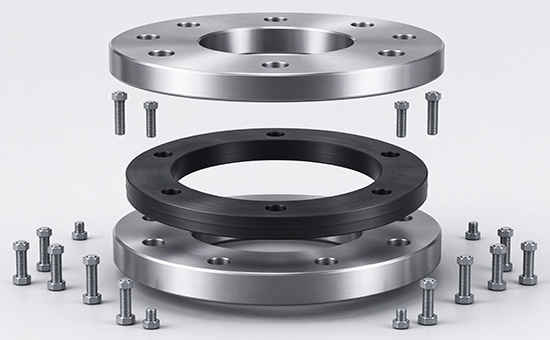
2. Tips for replacing nitrile reclaimed rubber with nitrile rubber in flange gasket production
(1) Reasonable choosion of nitrile reclaimed rubber
Different oils, additives, and operating temperatures affect the rubber's swelling, hardness changes, and strength retention ability differently. When using nitrile reclaimed rubber instead of nitrile base rubber to produce oil-resistant flange gaskets, it is necessary to choose nitrile reclaimed rubber based on sealing conditions, rather than focusing solely on processing performance: For medium and low-pressure oil/water seals, it is recommended to choose nitrile reclaimed rubber with tensile strength ≥ 10MPa; For low-pressure flange sealing gaskets, it is recommended to choose nitrile reclaimed rubber with 8-10MPa; For thin gaskets, it is recommended to choose 60-80 mesh ultra-fine nitrile reclaimed rubber to prevent surface roughness.
When purchasing nitrile reclaimed rubber, it is recommended that flange gasket manufacturers pay attention to raw material source, batch stability, fineness, impurity content, and basic physical properties, and try to choose nitrile reclaimed rubber with stable performance that matches the requirements of the target product.
(2) Strictly control the dosage ratio of nitrile reclaimed rubber
Nitrile reclaimed rubber is often used together with nitrile rubber to produce flange gaskets. In general flange gaskets, 50%-80% can be added, and under high pressure or dynamic conditions, 30%-50% nitrile reclaimed rubber can be added. It should be noted that the specific properties of nitrile reclaimed rubber are greatly affected by raw material sources and recycling processes, and different products cannot be simply interchanged in the same proportion.
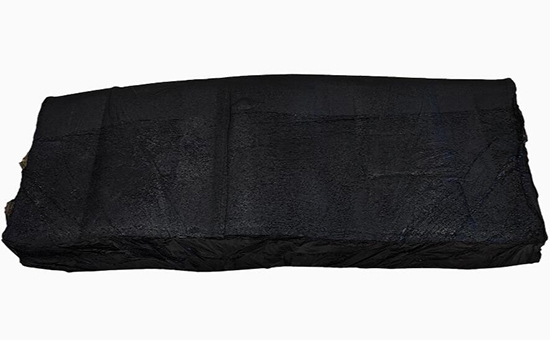
3. Issues to note when designing the formula for nitrile reclaimed rubber flange gaskets
When producing flange gaskets using nitrile reclaimed rubber or nitrile rubber/reclaimed rubber combined with rubber rubber, it is necessary to reasonably design rubber formulas based on the gasket's oil resistance, hardness, tensile strength, and permanent compression deformation, paying attention to the following issues.
(1) Carbon black can serve as a reinforcing force, improving the strength and wear resistance of nitrile reclaimed rubber E6LYY79compounds, but excessive dosage may increase the hardness of the compound and affect the gasket's adhesion to microscopic unevenness on the flange surface. Therefore, carbon black types and amounts should be reasonably chosen based on gasket thickness, compression load, and sealing structure.
(2) Nitrile Reclaimed Rubber Flange Gasket When choosing a softener, compatibility with nitrile rubber and oil resistance requirements must be considered. When choosing an oil-resistant plasticizer system, observe changes in volume, mass, and hardness through oil immersion tests to avoid migration of the softener or extraction by the medium, which could degrade the compound's properties.
4. Reference formula for high-performance oil-resistant flange gaskets produced by combining nitrile reclaimed rubber and nitrile rubber
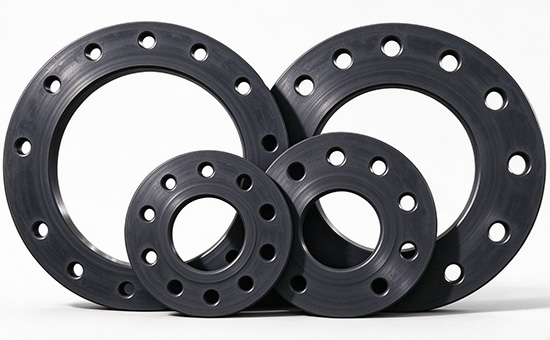
Nitrile rubber 60 parts, nitrile reclaimed rubber 40 parts, zinc oxide 18 parts, stearic acid 1 part, magnesium oxide 4 parts, paraffin 1.5 parts, carbon black N330 45 parts, spray carbon black 20 parts, barium sulfate 50 parts, Lide powder 8 parts, dibutyl sabate 25 parts, DCP 2.5 parts; A total of 275 parts.
5. Key points of the flange gasket mixing and vulcanization process for producing nitrile reclaimed rubber
(1) Key points of the mixing process: Producing flange gaskets using nitrile reclaimed rubber and nitrile rubber together requires strict control of the mixing process. During mixing, accurate weighing and uniform mixing must be ensured. Mixing temperature and time should be determined based on equipment, loading amount, and formula. Powdered additives such as carbon black should be added in batches to avoid local agglomeration. Softeners should be added in stages to prevent the compound from becoming too soft or unevenly dispersed. Accelerators and sulfur should usually be added after the compound has cooled appropriately to prevent excessive discharge temperatures and increased risk of scorch.
(2) Key points of the vulcanization process: When producing flange gaskets using nitrile reclaimed rubber and nitrile rubber together, compression molding is often used. The vulcanization time should be determined based on the vulcanization characteristics of the compound, product thickness, and mold temperature.
When using nitrile reclaimed rubber to reduce costs in nitrile rubber flange gaskets, it is essential to choose appropriate nitrile reclaimed rubber based on specific needs, determine the appropriate reclaimed rubber dosage ratio through testing, and effectively reduce raw material costs and production energy consumption while meeting the performance requirements of rubber flange gaskets.
Exclusive original article [commercial authorization] reprint, excerpt and excerpt in any form are prohibited without written authorization. Focus on Hongyun rubber: learn the process formula and raw material technology of producing rubber products from recycled rubber to help you reduce costs and increase profits