Tire recycled rubber, made from the rubber parts of waste tires through processes such as crushing, desulfurization, and refining, retains the basic performance characteristics of rubber. It can be used alone or together with natural rubber and styrene-butadiene rubber to produce rubber soles, effectively reducing material costs. When using tire recycled rubber to produce rubber soles, improper option of recycled rubber or poor formula design can affect the overall performance and service life of the finished product. Therefore, when incorporating tire recycled rubber into rubber soles, the following issues must be considered.
1. Consider the physical properties of rubber soles and control the proportion of tire recycled rubber
Rubber soles have higher requirements for elasticity, flexibility, wear resistance and bonding strength, and the higher the glue content, the better the comprehensive performance of the sole. The effective rubber hydrocarbon content E5LYY1127, elasticity, tensile strength, tear elongation and other indicators of tire recycled rubber are lower than those of natural rubber and latex recycled rubber. Under normal circumstances, the proportion of tire recycled rubber in high-end rubber soles does not exceed 20%, ordinary sports soles and labor insurance soles can be mixed with 30%-50% tire recycled rubber, and low-end rubber soles can be mixed with 60%-80% tire recycled rubber.
2. Consider the environmental performance of tire recycled rubber
When tyre recycled rubber is mixed with rubber soles, it is recommended to choose environmentally friendly tire recycled rubber certified by the EU RoHS environmental protection directive. The EU RoHS Directive aims to restrict the use of 10 harmful substances in products, including lead, mercury, cadmium, hexavalent chromium, polybrominated biphenyls, polybrominated diphenyl ethers and 4 phthalates, which directly affect human health.
3. Consider the source and quality stability of tire recycled rubber
The viscosity, ash content and tensile strength of different batches of tire recycled rubber from the same manufacturer may fluctuate, which directly affects the stability of the sole rubber and the quality uniformity of the finished rubber sole. When using tire recycled rubber to produce rubber soles, it is necessary to establish a complete testing and inventory early warning system, conduct random inspections of each batch of recycled rubber, and replenish inventory in time to avoid fluctuations in the quality of recycled rubber or sudden out-of-stock that affect the normal production of rubber soles,especially indicators such as Mooney viscosity, tensile strength, and elongation at break.
4. Consider the glue content and filler content of tire recycled rubber
The glue content of tire recycled rubber is generally among 30%-50%, containing a large amount of carbon black, calcium carbonate and other reinforcements, fillers, these compounds will occupy the filler space in the formula, if the filler is added to the original proportion in the formula, it may lead to the total amount of filler is too high, affecting the elasticity and softness of the sole. Therefore, when designing rubber sole formulas containing tire recycled rubber, it is necessary to take into account the filler already contained in tire recycled plastic.
5. Consider the residue of sulfur and accelerator in the tire recycling glue
When tire recycled rubber is used with natural rubber, styrene-butadiene rubber to produce rubber soles, sulfur-accelerator system is mostly used. Residual cross-linked network debris in tire recycling rubber consumes a portion of the accelerator and sulfur. When the rubber sole formula is mixed with tire recycled rubber, the amount of sulfur and accelerator needs to be appropriately increased on the basis of the original formula, generally sulfur increases by 5%-15%, accelerator increases by 10%-20%, and the specific amount is determined according to the test.
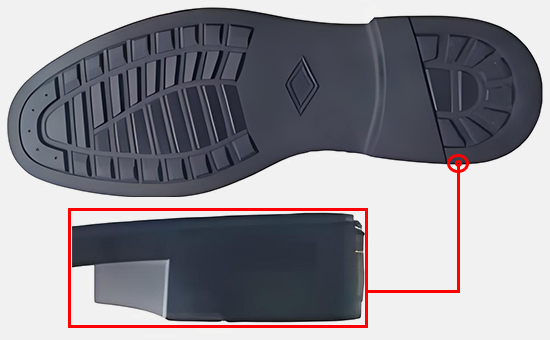
In actual production, tire recycled rubber is mostly used to produce black rubber soles, such as rubber outsoles, sponge midsoles, hard midsoles, inner heels, etc., different parts have different performance requirements, and the proportion of tire recycled rubber blending varies greatly; Later, I will share with you the vulcanization formula of each part of the rubber sole produced by tire recycled rubber.
Exclusive original article [commercial authorization] reprint, excerpt and excerpt in any form are prohibited without written authorization. Focus on Hongyun rubber: learn the process formula and raw material technology of producing rubber products from recycled rubber to help you reduce costs and increase profits