Latex reclaimed rubber is made from waste natural rubber, waste latex, and their products, retaining the basic properties of natural rubber. It has good elasticity, plasticity, and processing adaptability, and can be used together with natural rubber to produce rubber water pipes, reducing raw material costs while improving the processing performance of the rubber material. In actual production, how much latex reclaimed rubber is suitable for rubber water pipes? How to design the formula for rubber water pipes containing latex reclaimed rubber?
1. Tips for choosing latex reclaimed rubber for rubber water pipes
Rubber water pipes mainly include ordinary water pipes, low-pressure water supply hoses, agricultural irrigation hoses, and some industrial rubber hoses. Different products have significant differences in rubber material requirements. Ordinary water pipes focus more on flexibility, flexural resistance, and service life; Pressurized water pipes also need to pay attention to burst pressure, pulse fatigue performance, and the bonding among the rubber layer and the reinforcement layer.
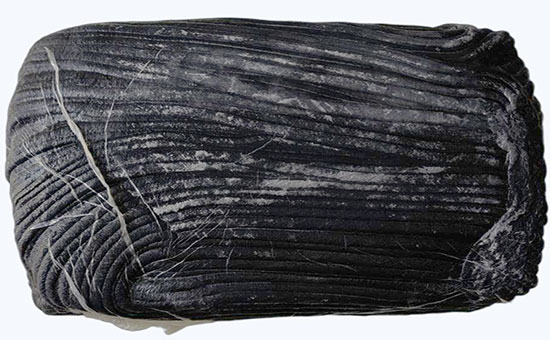
Latex reclaimed rubber features high strength, good elasticity, and high elongation at break, and is compatible with natural rubber. When used for rubber water pipes, it should be determined based on the specific performance requirements of the pipe E6LYY72. Price alone should not be the focus; it is also necessary to comprehensively consider the Mooney viscosity or plasticity, tensile properties, impurities, and batch stability of the reclaimed rubber. From a cost perspective, it is recommended to use black latex reclaimed rubber for black rubber water pipes (the price of black latex reclaimed rubber with the same specifications is significantly lower than white latex reclaimed rubber), which is more costly.
2. How to determine the proportion of latex reclaimed rubber in rubber hoses
Using natural rubber and latex reclaimed rubber in an appropriate ratio to produce rubber water pipes can effectively reduce raw material costs while retaining the necessary physical properties of the pipes; As the amount of reclaimed rubber increases, the strength, elongation, and fatigue performance of the rubber compound may change, so it is necessary to determine the performance requirements of rubber water hoses through testing, such as pipe strength, pressure resistance, and flexural resistance.
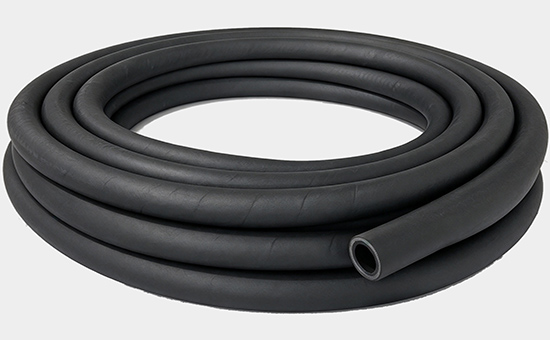
The outer layer rubber of rubber water pipes does not come into direct contact with water and can be mixed with 20%-50% latex reclaimed rubber; The inner layer rubber has long-term contact with water and needs to consider water resistance and resilience indicators, so 10%-30% latex reclaimed rubber can be added; Ordinary low-pressure water transfer rubber hoses (as a whole) can be mixed with 20%-40% latex reclaimed rubber. The pressure resistance rating, physical performance requirements, and quality of latex reclaimed rubber all affect the proportion of reclaimed rubber added to rubber hoses.
3. Precautions for designing formulas for latex reclaimed rubber production rubber hoses
When producing rubber hoses using natural rubber and latex reclaimed rubber together, a sulfur-accelerator system is commonly used, combined with zinc oxide and stearic acid for activation; When high strength is required for rubber hoses, it is recommended to choose reinforced carbon black; To further reduce production costs, the proportion of calcium carbonate and other fillers can be adjusted while meeting performance requirements; Control the amount of softener used, as excessive amounts may reduce the strength of the compound and affect pressure resistance.
4. Precautions for the production process of latex reclaimed rubber rubber and rubber water pipes
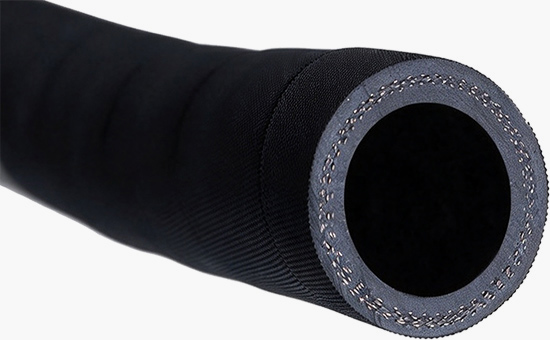
When producing rubber water pipes using natural rubber/latex reclaimed rubber together, attention must be paid to the feeding sequence and discharge temperature during mixing to avoid overheating and scorching risks. During vulcanization of rubber water pipes, the plasticity and flowability of latex reclaimed rubber and natural rubber combined rubber affect the extrusion state of rubber hoses. It is recommended to maintain stable rubber plasticity and adjust barrel temperature, screw speed, and mouth size according to equipment capacity to reduce wall thickness fluctuations, surface defects, and dimensional deviations.
When using latex reclaimed rubber to reduce production costs for rubber water pipes, it is not simply about increasing the proportion of latex reclaimed rubber added. Under the premise of stable reclaimed rubber quality, a reasonable usage ratio is found through formulation testing, process adjustments, and finished product validation, balancing material costs, processing efficiency, and product lifespan to achieve stable production and continuous cost reduction.
Exclusive original article [commercial authorization] reprint, excerpt and excerpt in any form are prohibited without written authorization. Focus on Hongyun rubber: learn the process formula and raw material technology of producing rubber products from recycled rubber to help you reduce costs and increase profits