Pipe seals mainly work at the connection points of drainage pipes, sewage pipes, and some industrial pipelines. Their function is to prevent medium leakage, cushion joint displacement, and maintain connection stability. The rubber material is required to have good elasticity, aging resistance, and compression set performance. EPDM recycled rubber has advantages such as weather resistance, ozone resistance, water resistance, and heat aging resistance. Can it be used in the production of pipe seals? How can EPDM recycled rubber be better used in pipe seals? What issues should be noted?
1. Application methods of EPDM recycled rubber in pipe seals
There are mainly three application methods of EPDM recycled rubber in pipe seals.
(1) Full use of EPDM recycled rubber: Choose high-quality EPDM recycled rubber to produce ordinary pipe seals. This can significantly reduce raw material costs while ensuring product weather and water resistance.
(2) Combined use of EPDM recycled rubber and virgin EPDM rubber: Can be used in any proportion to reduce pipe seal production costs, improve rubber flow, and enhance the dimensional stability of the final product.
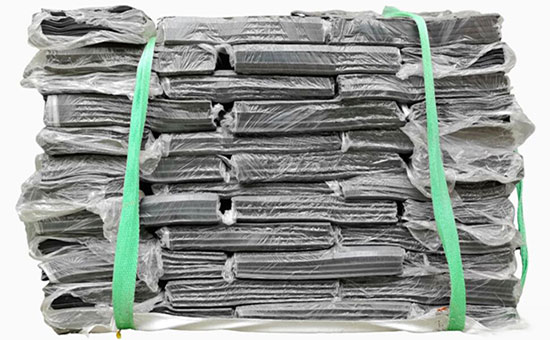
(3) Mixed use of EPDM recycled rubber and other rubbers: For example, using a small amount of natural rubber can improve the mechanical strength of pipe seals, and combining with butyl rubber can enhance aging and chemical corrosion resistance.
2. Key points in formula design for pipe seals made with EPDM recycled rubber
When using EPDM recycled rubber to produce pipe seals, the vulcanization system mostly adopts a sulfur-accelerator system. Specific types and amounts should be adjusted according to the vulcanization characteristics of recycled rubber and other raw rubbers to ensure suitable vulcanization speed and crosslinking degree. Common reinforcing fillers include carbon black and calcium carbonate, which adjust hardness, tensile strength, and compression deformation. For plasticizing and softening systems, it is recommended to choose types compatible with EPDM recycled rubber, such as paraffin oil, and control the dosage to avoid plasticizer migration affecting long-term seal performance.
3. Key points in mixing and vulcanization process control for pipe seals produced with EPDM recycled rubber
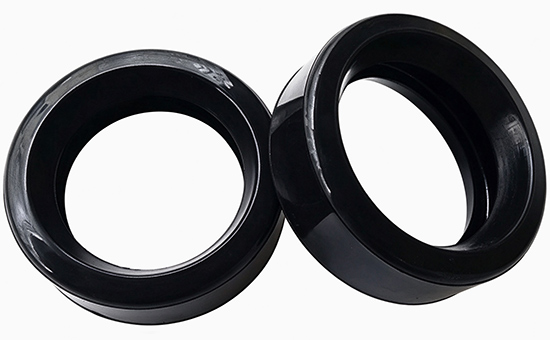
When producing pipe seals using EPDM recycled rubber or a combination of EPDM rubber/recycled rubber, it is necessary to ensure uniform mixing. Depending on equipment conditions, arrange mastication and mixing processes, control mixing temperature and time, and ensure the recycled rubber is fully dispersed to avoid local aggregation of additives affecting product performance. For compression molding, vulcanization temperature and time should be determined based on product thickness, mold structure, and rubber vulcanization characteristics. It is recommended to use a vulcameter to determine suitable vulcanization conditions and test finished products for hardness, tensile properties, compression set, and sealing performance.
The key to cost reduction in pipe seals using EPDM recycled rubber lies in balancing the recycled rubber ratio, formulation design, processing technology, and production costs. Proper use of EPDM recycled rubber can not only reduce raw material costs but also improve rubber processing adaptability. For pipe seals of different specifications and service environments, it is recommended to determine the best solution through small-scale formula tests and actual seal tests, taking both production economics and product service life into account.
Exclusive original article [commercial authorization] reprint, excerpt and excerpt in any form are prohibited without written authorization. Focus on Hongyun rubber: learn the process formula and raw material technology of producing rubber products from recycled rubber to help you reduce costs and increase profits