Building door and window sponge sealing strips need to have good elasticity, weather resistance, ozone resistance, and compressive resilience, and are generally processed primarily from EPDM rubber. EPDM reclaimed rubber has the basic properties and good processing performance of EPDM rubber, can partially replace EPDM rubber in sponge sealing strip production, helping enterprises reduce raw material costs. When producing foam sealing strips using EPDM reclaimed rubber, the selection, blending ratio, formulation design, and production process all affect the performance of the finished product.
1. Tips for selecting EPDM recycled rubber for sponge sealing strips for building doors and windows
When selecting EPDM recycled rubber for sponge sealing strips for building doors and windows, it is necessary to understand the effective rubber hydrocarbon content, tensile strength, hardness, ash, acetone extract, fineness, and Mooney viscosity of the reclaimed rubber.
When producing door and window sponge sealing strips with EPDM reclaimed rubber, rubber hydrocarbons are the effective main agents involved in vulcanization reactions; Indicators such as tensile strength and hardness directly affect the mechanical strength E6LYY7821 of finished products; High ash content indicates more inorganic fillers, affecting reinforcement and foaming; High acetone extract means more softening oil, which dilutes foaming agents, lowers Mooney foam, and increases foaming ratio; Mooney viscosity affects processing stability, foam hole uniformity, and sealing performance of finished products; If the rubber is too coarse and contains impurities, the sealing strip may enlarge into pitting or bubble breakage after foaming.
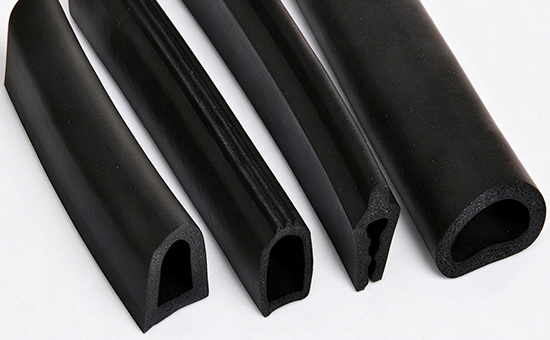
For building door and window sponge sealing strips, if you want to use EPDM reclaimed rubber to reduce costs, it is recommended to choose rubber hydrocarbons ≥ 45%, ash ≤8%, acetone extract ≤15%, Mooney viscosity 40-60, fineness ≥ 60 mesh, ultrafine filtration EPDM reclaimed rubber; For products with environmental requirements, choose RoHS-certified EPDM reclaimed rubber.
2. Synergy among vulcanization and foaming systems for sponge sealing strips in building door and window reclaimed rubber production
When producing sponge sealing strips for construction doors and windows using EPDM reclaimed rubber and EPDM rubber/reclaimed rubber together, the coordination among the vulcanization and foaming systems is crucial; If the vulcanization rate is too fast and the compound has not fully flowed, the foaming agent will begin to decompose, which can easily cause issues such as coarse pores, uneven distribution, and localized collapse. For hot air vulcanization foaming using continuous extrusion, it is best to let the rubber surface vulcanize before foaming, forming a vulcanized skin before foaming.
In the formulation of EPDM reclaimed rubber foam sealing strips, a commonly used sulfur-accelerator system is used, using accelerators M, BZ, TMTD combined with sulfur; Common organic foaming agents include AC, OBSH, H, etc., while inorganic foaming agents include sodium bicarbonate. It should be noted that foaming agents AC and OBSH tend to delay vulcanization, while foaming agent H tends to promote it, and accelerators also lower the decomposition temperature of the blowing agent; If necessary, use hyposulfonamide accelerators combined with small amounts of autumn ram accelerators to improve the matching relationship among vulcanization and foaming.
3. Key points of the production process for EPDM reclaimed rubber for building door and window sponge sealing strips
(1) Mixing: When using EPDM reclaimed rubber to produce sponge sealing strips for building doors and windows, attention must be paid to the adhesive roller and temperature rise during mixing. The discharge temperature should be controlled among 120-140°C to prevent premature decomposition of the foaming agent during mixing; Adding foaming agents and vulcanizing agents should be arranged according to process requirements to reduce early reaction of the compound.
(2) Extrusion: During the extrusion process of sponge sealing strips for building doors and windows, increasing the amount of EPDM reclaimed rubber can improve the flow of the compound. It is necessary to adjust the opening shape, extrusion temperature, and speed according to the cross-section of the sponge sealing strip, and, if necessary, adjust the viscosity of the compound through a reinforcement system to ensure product size and surface quality.
(3) Vulcanization: When using salt bath, hot air, or microwave foam vulcanization for EPDM reclaimed rubber sponge sealing strips for building doors and windows, an appropriate preheating stage is needed to allow the compound to flow fully and fill the mouth, then proceed to the main foam vulcanization stage, which helps improve foam uniformity. For thicker sponge sealing strips, attention should also be paid to the degree of internal vulcanization to avoid under-sulfurization that can affect permanent deformation and long-term rebound.
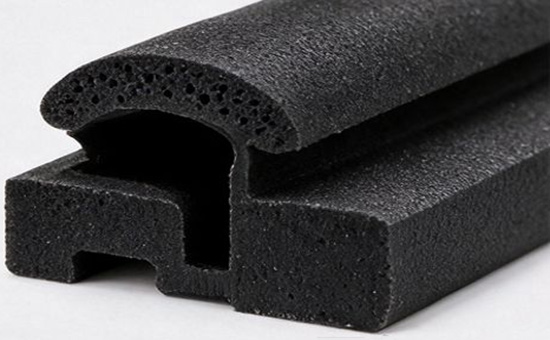
The key to reducing costs by using EPDM reclaimed adhesive for building door and window sponge sealing strips lies in controlling the mixing ratio, matching the vulcanization foaming system, and ensuring stable raw material batches. Premium EPDM recycled rubber uses EPDM machine head adhesive as the main raw material, featuring resistance to high and low temperatures, aging resistance, high insulation, ozone resistance, and corrosion resistance. Compared to EPDM reclaimed sealing strips, it also features higher adhesive content, no odor, good elasticity, and a smooth, glossy product surface, making it an ideal raw material for producing sponge sealing strips for building doors and windows.
Exclusive original article [commercial authorization] reprint, excerpt and excerpt in any form are prohibited without written authorization. Focus on Hongyun rubber: learn the process formula and raw material technology of producing rubber products from recycled rubber to help you reduce costs and increase profits