EPDM reclaimed rubber is processed from EPDM machine head rubber, unvulcanized EPDM rubber, or waste EPDM rubber products. It retains the basic performance characteristics of EPDM rubber and is highly compatible with EPDM rubber. It can fully or partially replace EPDM rubber in producing various molded rubber miscellaneous parts, effectively reducing raw material costs and production energy consumption while ensuring the performance and lifespan of finished products.
1. What molded rubber miscellaneous parts can EPDM reclaimed rubber produce?
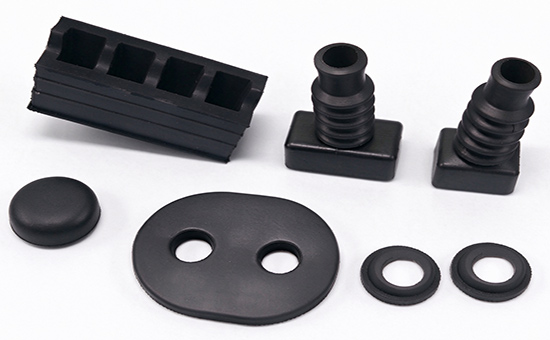
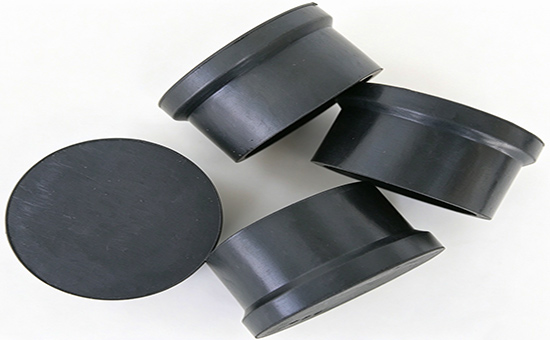
EPDM reclaimed rubber has excellent resistance to high and low temperatures, ozone resistance, and weather resistance. It can be used alone or combined with EPDM raw rubber to produce rubber products with strict aging resistance requirements, such as outdoor equipment sheaths, end caps, sealing rings, pipeline protective sleeves, sealing gaskets, pipeline seals, mechanical dust covers, anti-corrosion liners, and general protective gaskets; Outdoor equipment molded parts maintain good appearance, elasticity, and dimensional stability after long-term exposure to sun and rain.
2. Precautions for producing molded rubber miscellaneous parts from EPDM reclaimed rubber
When using EPDM reclaimed rubber to reduce the production cost of molded miscellaneous parts, it is not enough to consider only price and the proportion of additives; attention must also be paid to the processing performance of the rubber compound.
(1) Control the mixing ratio of EPDM recycled rubber in molded miscellaneous parts
When using EPDM reclaimed rubber to reduce costs for rubber molded miscellaneous parts, as the proportion of recycled rubber increases, the tensile strength, elongation, elastic E6LYY7827, and permanent deformation of vulcanized rubber will change to some extent; For molded miscellaneous parts with simple structures and average performance requirements, the usage ratio can be appropriately increased; For thin-walled, deep-cavity, and products requiring significant deformation, the proportion of EPDM reclaimed rubber must be strictly controlled to avoid issues such as rubber shortages, brittle cracking, and insufficient rebound.
(2) Key points of the processing process for molded miscellaneous parts produced in EPDM reclaimed rubber
When producing rubber molded miscellaneous parts using EPDM reclaimed rubber or EPDM rubber/reclaimed rubber, attention must be paid to mixing dispersion and compound flowability. Carbon black, softening agents, and vulcanizing additives must be fully dispersed to avoid local scorching or uneven vulcanization; During molding, attention must be paid to the flow of the compound inside the mold cavity. If the compound is too hard, it can cause missing material at the edges, while if too soft, it may increase the difficulty of flash and dimensional control.
The vulcanization performance of EPDM reclaimed rubber differs from that of EPDM rubber. It is recommended to determine the positive vulcanization time by vulcanizing instrument, adjusting vulcanization parameters for molded parts based on product thickness, mold temperature, and actual equipment conditions to reduce undersulfurization, oversulfur, and product size fluctuations.
3. Reference formula for vulcanization of molded rubber miscellaneous parts produced by EPDM reclaimed rubber
EPDM rubber 30 parts, EPDM reclaimed rubber 70 parts, zinc oxide 5 parts, stearic acid 1.5 parts, anti-aging agent 1 part, carbon black N550 60 parts, light calcium carbonate 50 parts, paraffin oil 15 parts, accelerator M 1 part, accelerator TMTD 1 part, sulfur 0.5 parts; Total 235 parts.
In actual production, the Mooney viscosity, ash content, residual vulcanization system, and base rubber characteristics of EPDM reclaimed rubber all affect the vulcanization reaction. These ratios should not be directly regarded as fixed production formulas. It is recommended to adjust the application ratio of EPDM reclaimed rubber, as well as carbon black, softening oil, and vulcanization systems, based on product hardness, tensile strength, elongation at break, and permanent deformation under compression. For molded parts with higher heat resistance requirements, peroxide vulcanization can also be used. It is recommended to reduce raw material costs more while ensuring the processing performance and usability of molded parts through small-scale formulation verification, molding trial production, and finished product performance testing.
Exclusive original article [commercial authorization] reprint, excerpt and excerpt in any form are prohibited without written authorization. Focus on Hongyun rubber: learn the process formula and raw material technology of producing rubber products from recycled rubber to help you reduce costs and increase profits