Nitrile recycled rubber has excellent oil resistance, wear resistance, heat resistance, and good aging resistance, and can be used alone or in combination with nitrile original rubber to produce various oil-resistant and wear-resistant rubber products, such as oil seals, O-rings, sealing gaskets, valve gaskets, leather bowls, wear-resistant parts, etc. What are the steps required for molded rubber products when using nitrile recycled rubber to produce molded rubber products? What should I pay attention to when designing a molded compound formulation for nitrile recycled adhesive?
1. Key points of nitrile recycled rubber molding process
(1) It is recommended that the compounded nitrile recycled adhesive material can be directly pressed into film after 12 hours of parking, and then cut to ensure that the compound fills the model in shape and weight. In principle, the shape and size of the unvulcanized compound placed in the model should be as close as possible to the product.
(2) If the adhesive in the model needs to have a certain viscosity, you can rub the glue or solvent on the surface of the compound before closing the mold, so that the compound can be well fused together when molded.
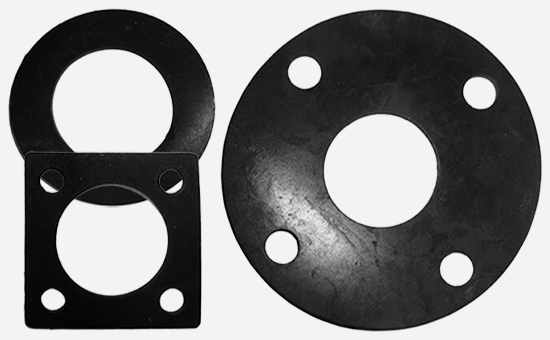
(3) When molding nitrile recycled adhesive, vulcanization time, vulcanization temperature and other parameters need to be determined according to the shape, size, size and characteristics of the vulcanization formula E5LYY714 the product. The prepared compound is loaded into the model, and then the model is pushed into the hot plate of the plate vulcanizing machine, and the vulcanization is molded and vulcanized according to the specified vulcanization time, temperature and pressure.
2. Nitrile recycled rubber molded product formula design
(1) Characteristics of nitrile recycled adhesive molded compound formula
(1) High plasticity, before the start of vulcanization, the compound should flow easily in the model and be able to fuse evenly; (2) The rubber is not easy to burn and has a long storage time; (3) The vulcanization speed is fast, and the rubber can achieve flat positive vulcanization in a short period of time, shortening the vulcanization cycle and improving the utilization rate of the model. (4) The compressive deformation of the rubber material is required to be small, and the heat resistance and aging performance are good.
(2) Attention to the design of nitrile recycled adhesive molding compound formula
(1) When choosing a vulcanization system for nitrile recycled adhesive molding, it must be carefully considered according to the molding vulcanization method, vulcanization conditions (temperature and time), storage time of the compound, and the characteristics and specifications of the product.
(2) It is recommended to add an appropriate amount of silicone oil, wax and other substances as separators in the formula containing clay and modified aldehyde resin.
(3) Use a small amount of lubricant to increase the fluidity of nitrile recycled adhesive; Control the amount of lubricant to prevent the spraying surface from preventing the compound from blending with each other during molding.

3. Nitrile rubber/nitrile recycled rubber is used to produce oil-resistant sealing gasket vulcanization formula
30 parts of nitrile rubber, 70 parts of nitrile recycled rubber, 5 parts of zinc oxide, 1 part of anti-aging agent BLE, 70 parts of carbon black N330, 10 parts of DOP, 4 parts of polyester plasticizer, 1.5 parts of accelerator DM, 0.5 parts of accelerator TMTM, 1.5 parts of sulfur; Total 193.5 copies.
When using nitrile recycled rubber to produce molded rubber products, rubber product manufacturers need to choose the appropriate variety of nitrile recycled rubber, reasonably design rubber molds and rubber formulas, strictly control the production process parameters, especially vulcanization and compounding processes, and continue to discuss related issues with you later.
Exclusive original article [commercial authorization] reprint, excerpt and excerpt in any form are prohibited without written authorization. Focus on Hongyun rubber: learn the process formula and raw material technology of producing rubber products from recycled rubber to help you reduce costs and increase profits