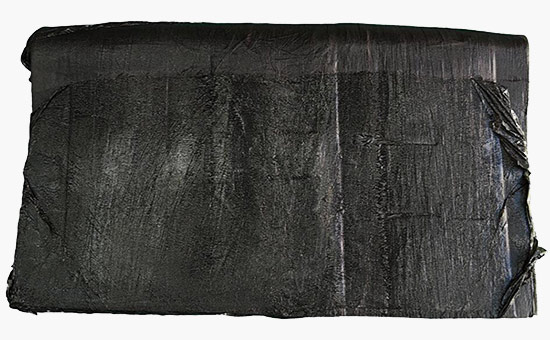
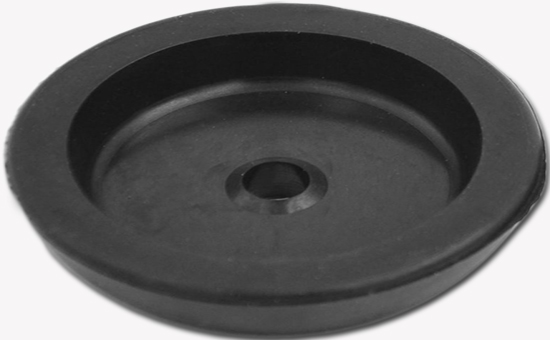
Nitrile recycled rubber has excellent oil resistance and can be used alone or in combination with nitrile rubber and neoprene to produce oil-resistant rubber products, effectively reducing the cost of raw materials, rubber leather bowls are one of them. Rubber leather bowl is used in automobile hydraulic brake system, clutch control system and pumping system to play a role in transmitting pressure and sealing, oil-resistant nitrile rubber leather bowl can be used in oil media for a long time to maintain a good sealing effect; Appropriate amount of NBR recycled rubber can effectively reduce the cost of raw materials.
1. The advantages of nitrile recycled rubber in the production of oil-resistant nitrile rubber leather bowls
(1) Cost reduction: Nitrile recycled rubber retains the basic performance characteristics of nitrile rubber, excellent oil resistance, good heat resistance, wear resistance, and the price is much lower than that of nitrile rubber.
(2) Improved process: Compared with nitrile rubber, nitrile recycled rubber has better plasticity and fluidity, fillers, vulcanizing agents, etc. are easier to mix evenly, and the expansion and contraction are smaller than new rubber, and the shape and size of the finished product are more accurate, which can reduce the power consumption in the production of oil-resistant nitrile rubber leather bowls and improve the yield.
2. Nitrile recycled rubber formula for oil-resistant nitrile rubber leather bowls
When using nitrile recycled rubber to reduce costs for oil-resistant nitrile rubber leather bowls, it is necessary to focus on key indicators such as oil resistance, heat resistance, compression set and low-temperature brittleness.
(1) Option skills for nitrile recycled rubber for rubber leather bowls
Nitrile recycled rubber produces oil-resistant rubber leather bowls, giving priority to nitrile recycled rubber with a glue content of ≥ 50%, with a more complete molecular chain structure, large oil resistance coefficient, high mechanical strength, good feel elasticity, good heat resistance, and all indicators are closer to the original rubber. Use high-fineness, impurity-free nitrile recycled rubber to avoid impurities from scratching the cylinder wall and have a better sealing effect.
(2) Nitrile recycled rubber bowl mixer option skills
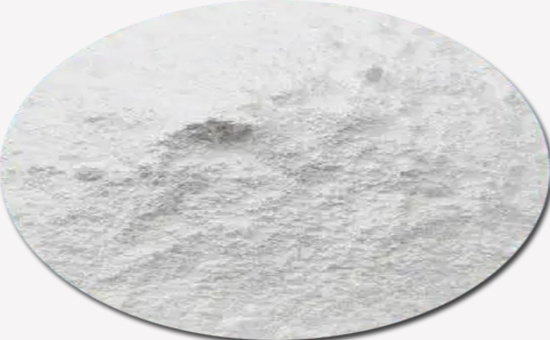
When nitrile recycled rubber replaces part of nitrile original rubber to produce oil-resistant rubber bowls, the oxide vulcanization system can give the rubber better heat resistance and low compression set deformation. When the mechanical strength E5LYY915 of rubber leather bowls is high, a low-sulfur and high-promotion system can be used, or peroxide can be used in combination with sulfur. When using carbon black for reinforcement of nitrile recycled rubber bowls, it is necessary to control the amount of carbon black, avoid using medium and super wear-resistant carbon black, and use semi-reinforced carbon black with an appropriate amount of filler; Under the premise that the process performance allows, the amount of softener is appropriately reduced, and the dimensional stability, wear resistance, and low compression set performance of nitrile recycled adhesive are better.
3. Nitrile rubber/nitrile recycled rubber is used to produce oil-resistant rubber bowl vulcanization formula
70 parts of nitrile rubber, 30 parts of nitrile recycled rubber, 5 parts of zinc oxide, 1 part of stearic acid, 1.5 parts of anti-aging agent 4010NA, 1 part of anti-aging agent MB, 75 parts of carbon black N330, 15 parts of dibutyl sebacate, 1.5 parts of accelerator DM, 1.5 parts of accelerator TMTD, 2 parts of cumene peroxide, 0.5 parts of sulfur; A total of 204 copies.
4. Nitrile rubber/nitrile recycled rubber is used to produce oil-resistant rubber bowls
(1) Compound treatment
When using nitrile rubber/nitrile recycled rubber and using glue to produce oil-resistant bowls, the lump mixture needs to be dispersed in advance, such as stearic acid ≤5g/piece; Powdered compounds are screened, such as sulfur and zinc oxide with 60-80 mesh screens; Liquid plasticizers are heated to remove water, such as ester plasticizers dioctyl phthalate (DOP), dibutyl phthalate (DBP), etc., and the moisture content is easy to exceed the standard, and it needs to be heated to remove water.
(2) Key points of mixing
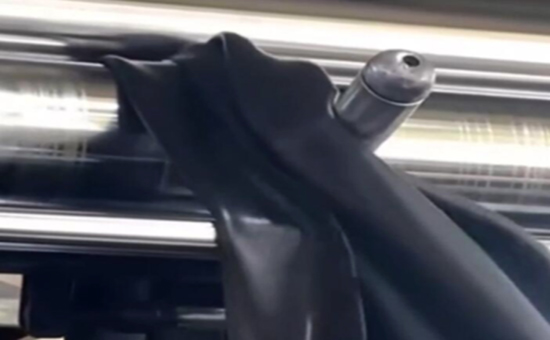
When mixing nitrile rubber/nitrile recycled rubber with glue, it is recommended to use low temperature small roller spacing, mix in sections, first add recycled rubber and softener, then gradually add carbon black, and finally add sulfur and accelerator to avoid excessive heat generation during mixing.
(3) Vulcanization process
It is recommended to use a vulcanization temperature of 150-160°C, and appropriately extend the vulcanization time according to the thickness of the leather bowl to ensure that the rubber is fully cross-linked and avoid brittle rubber or bubbles caused by too fast vulcanization speed.
Nitrile recycled rubber has excellent oil resistance, which is an ideal raw material to replace nitrile rubber to produce oil-resistant leather bowls, rubber leather bowl manufacturers choose the appropriate nitrile recycled rubber according to the specific needs of oil-resistant nitrile rubber leather bowls, and appropriately adjust the formula and production process, which can effectively reduce the cost of raw materials and production energy consumption under the premise of ensuring the service life of rubber leather bowls.
Exclusive original article [commercial authorization] reprint, excerpt and excerpt in any form are prohibited without written authorization. Focus on Hongyun rubber: learn the process formula and raw material technology of producing rubber products from recycled rubber to help you reduce costs and increase profits