When producing rubber products like sealing strips, rubber sheets, rubber hoses, and shock-absorbing parts using EPDM recycled rubber, even though rubber fillers are added in all cases, some formulations achieve stable extrusion dimensions and smooth surfaces, while others suffer from burrs, deformation, reduced strength, or even become brittle after vulcanization. This is likely due to using the wrong filler. EPDM recycled rubber has good high and low-temperature resistance, ozone resistance, and weather resistance. Using fillers properly can reduce material costs even further and improve mixing, extrusion, and vulcanization performance.
1. The role and application tips of calcium carbonate in EPDM recycled rubber formulations
Calcium carbonate is the most commonly used filler in EPDM recycled rubber production. It is widely available, low-cost, and easy to process. It mainly comes in heavy calcium carbonate, light calcium carbonate, ultra-fine active calcium carbonate, and nano calcium carbonate E6LYY423. Calcium carbonate has good heat resistance and electrical insulation, the rubber compound is easy to extrude and calender, and it can produce smooth surfaces while filling molds well, making product outlines clear. Its vulcanized rubber has good elasticity and flex resistance, but low stress at set elongation and poor abrasion resistance.
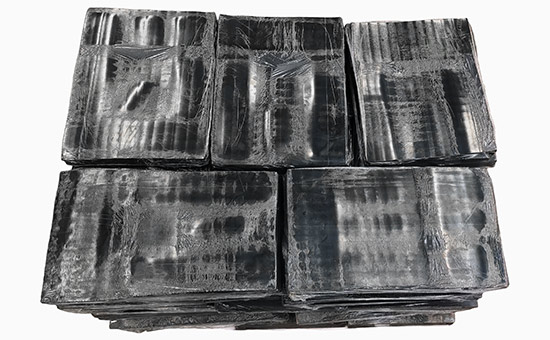
For low-cost EPDM recycled rubber products where high tensile strength is not required, using calcium carbonate as filler can increase volume and reduce costs effectively. However, too much calcium carbonate can cause hardness to rise, elongation to decrease, and the surface to turn white, so the amount must be controlled appropriately.
2. The role and application tips of clay in EPDM recycled rubber formulations
Clay is a commonly used low-cost inorganic filler in EPDM recycled rubber production, including hard clay, soft clay, and calcined clay. Adding clay to EPDM formulations makes processing easier, produces a smooth surface, increases compound viscosity, improves stiffness, and reduces shrinkage, acting as a good dispersant for carbon black. When used under 30 parts, clay can have some reinforcement effects, improving stress at set elongation, hardness, and abrasion resistance.
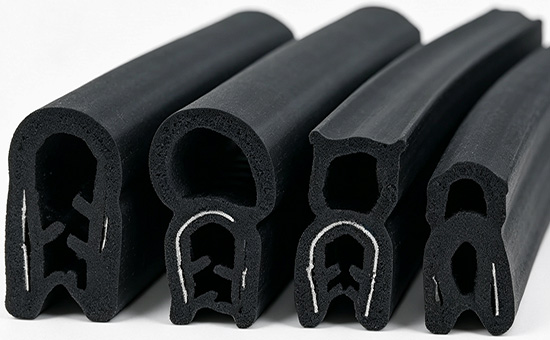
In practice, hard clay has a finer particle size and the best reinforcing effect, but it is acidic, can stick to rollers, and affect curing speed. Calcined clay has electrical insulation, is harder to mix in, delays curing, increases heat generation and deformation, and reduces tear and abrasion resistance. EPDM recycled rubber for cable products can use calcined clay.
3. The role and application tips of talc in EPDM recycled rubber formulations
Talc is chemically stable, acid and alkali-resistant, heat-resistant, and electrically insulating. In EPDM recycled rubber, it provides some reinforcement, increasing tensile strength, stress at set elongation, and hardness, without significantly affecting curing. It also improves extrusion. However, too much talc can reduce tear resistance and increase permanent deformation. Therefore, for high-elasticity or fatigue-resistant rubber products, talc should not be the sole reinforcement filler and is better used as an auxiliary filler.
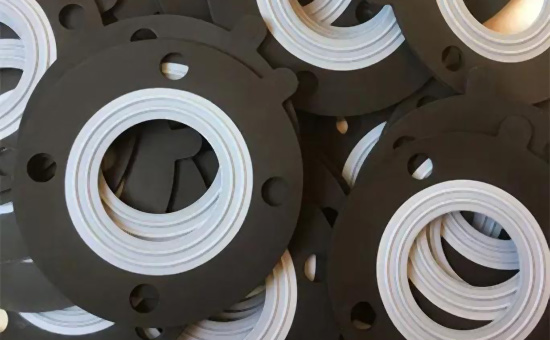
Many manufacturers increase low-cost filler amounts to further reduce formula costs when producing rubber products with EPDM recycled rubber, but this often leads to slower extrusion, poorer surface quality, and reduced vulcanization performance. When selecting fillers for EPDM recycled rubber products, one must consider the performance requirements of the product, physical properties of the recycled rubber, processing needs, and budget. For high-strength EPDM recycled rubber products, using both carbon black and mineral fillers is recommended. For regular rubber sheets and low-performance seals, increasing the proportion of calcium carbonate or clay can reduce material costs while maintaining basic performance.
Exclusive original article [commercial authorization] reprint, excerpt and excerpt in any form are prohibited without written authorization. Focus on Hongyun rubber: learn the process formula and raw material technology of producing rubber products from recycled rubber to help you reduce costs and increase profits