Nitrile reclaimed rubber is made from nitrile die head rubber, sub-brand nitrile rubber, or waste nitrile rubber products as raw materials, retaining the polar nitrile groups in the nitrile rubber molecular chain and providing good tolerance to mineral oil and fuel oil. Can it replace raw nitrile rubber in producing oil-resistant rubber hoses? In actual production, how should nitrile reclaimed rubber be correctly selected for oil-resistant rubber pipes? What precautions should be taken to produce oil-resistant rubber hoses using nitrile reclaimed rubber?
1. Tips for selecting nitrile reclaimed rubber for oil-resistant hoses
Oil-resistant hose manufacturers who want to use nitrile reclaimed rubber to reduce costs should not rely solely on price when selecting materials. The higher the content of nitrile reclaimed rubber, the closer its performance to the original rubber. It is recommended to prioritize products with ≥60% rubber content to ensure the tensile and tear strength of oil-resistant rubber hoses; The Mooney viscosity is controlled among 40-60, with good mixing and processability, preventing sticking and scorching; The mesh count ≥ 60 mesh, low impurity content, which can reduce hose defects and make extrusion molding smoother.
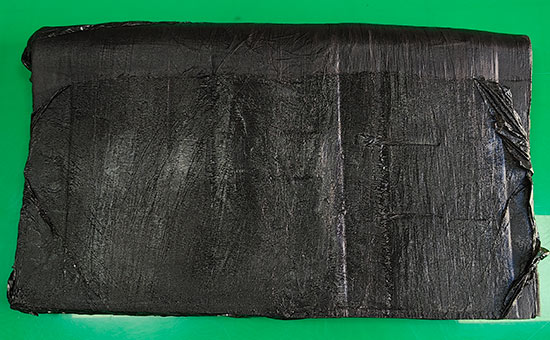
In actual production, reclaimed nitrile rubber is often used together with nitrile rubber to make oil-resistant rubber hoses. Nitrile rubber compound oil resistance is directly proportional to acrylonitrile content and inversely proportional to cold resistance: ordinary industrial oil-resistant rubber pipes are recommended to use medium-high acrylonitrile nitrile rubber with 28%-35% acrylonitrile content; For fuel and hot oil conditions (such as engine oil pipes), high acrylonitrile nitrile rubber with 36% or higher acrylonitrile content is selected; For nitrile rubber hoses used in low-temperature environments, it is recommended to use low acrylonitrile nitrile rubber compound with 18%-25% acrylonitrile content.
2. Key points for formula design for oil-resistant rubber tubing in nitrile reclaimed rubber production
Nitrile rubber and nitrile reclaimed rubber are used together to prepare oil-resistant rubber hoses. The vulcanization system prefers low-sulfur blends, resulting in vulcanized rubber with excellent heat aging resistance and oil resistance. The specific ratio is adjusted according to the ratio of raw rubber E6LYY63 to reclaimed rubber. Reinforcement systems generally use carbon black as the main material, but can be combined with N330, N660, and other carbon blacks according to hose hardness, strength, wear resistance, and processing performance requirements. Appropriate amounts of calcium carbonate and clay can further adjust the cost and processing performance of the compound compound. When designing a softening plasticizer system, it is not enough to consider only the difficulty of processing the compound but also the extraction effect of the oil medium on the plasticizer. It is recommended to select softeners and plasticizers that are compatible with nitrile rubber and nitrile reclaimed rubber, such as dibutyl phthalate (DBP) and pine tar.
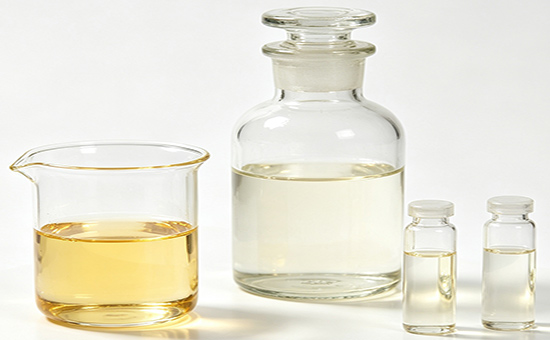
Oil-resistant rubber hoses are produced using nitrile rubber and nitrile reclaimed rubber as the main raw materials, with the core of the formulation design balancing oil resistance and processing performance.
3. Key Processing Points for Oil-Resistant Hoses in Nitrile Reclaimed Rubber Production
(1) Mixing: When producing oil-resistant rubber hoses using nitrile rubber and nitrile reclaimed rubber together, it is necessary to reasonably control the mixing temperature, feeding sequence, discharge temperature, and compound storage time. Note: The nitrile reclaimed rubber itself has already undergone processing and cutting, so when used together with the base rubber, it is not suitable for prolonged high-temperature plasticizing; The original nitrile rubber should be pre-plasticized according to the oil-resistant rubber hose formula and equipment characteristics, then the nitrile reclaimed rubber and various additives should be added to ensure the gradual and uniform dispersion of the filler and softener.
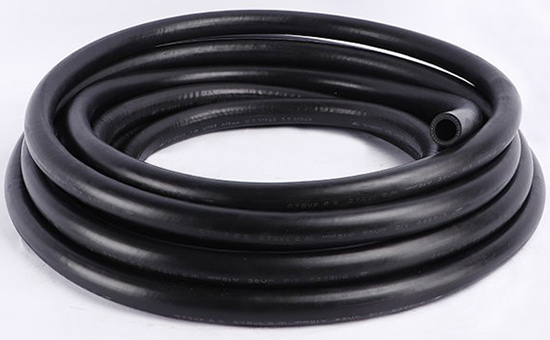
(2) Extrusion: When extrusion tubes of nitrile rubber and nitrile reclaimed rubber blends, the plasticity and extrusion temperature of the compound must remain stable. If the temperature is too low, the compound has insufficient flowability, making it easy for the product surface to become rough and dimensional fluctuations to occur; If the temperature is too high, the risk of scorching increases. Under continuous production conditions, the Mooney viscosity, scorching time, and vulcanization characteristics of the front and rear sections of the same batch of compound should be kept as consistent as possible.
For fabric-filled oil-resistant rubber hoses, the inner rubber, wiping rubber, and outer rubber need to be designed separately. Each rubber layer in oil-resistant rubber pipes has different functions: the inner layer focuses on oil resistance and sealing performance; the outer layer rubber needs to balance wear resistance, aging resistance, and adhesion strength to the reinforcement layer. Nitrile reclaimed rubber should be selected according to working conditions, with reasonable reclaimed rubber dosing ratios set and formulas and process parameters adjusted simultaneously, effectively reducing raw material costs while ensuring the performance of oil-resistant rubber hoses.
Exclusive original article [commercial authorization] reprint, excerpt and excerpt in any form are prohibited without written authorization. Focus on Hongyun rubber: learn the process formula and raw material technology of producing rubber products from recycled rubber to help you reduce costs and increase profits