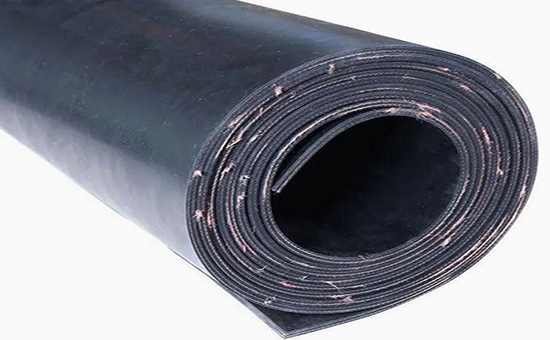
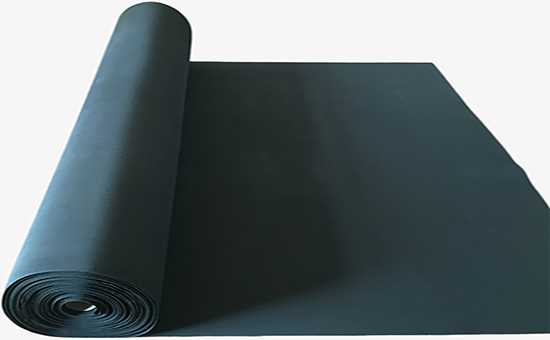
Reclaimed rubber refers to waste vulcanized rubber that has undergone crushing, heating, and mechanical and chemical treatments, turning it from an elastic state into rubber with certain plasticity and stickiness that can be reprocessed and vulcanized again. Its price is much lower than natural rubber and various synthetic rubbers, and it can partially or fully replace the original rubber, reducing the production cost of rubber products. When using reclaimed rubber to prepare calendering compounds, the compound should have good roll coating properties, flow, burn resistance, and low shrinkage. When designing a calendering compound formula with reclaimed rubber, a proper balance among roll coating property, flow, and shrinkage should be achieved.
1. Tips for choosing reclaimed rubber
When preparing calendering compounds with reclaimed rubber, compounds with good roll coating property are easier to calender. Different types of reclaimed rubber vary in roll coating ability. Latex reclaimed rubber has the best roll coating; tire reclaimed rubber is moderate, while nitrile, butyl, and EPDM reclaimed rubbers are relatively poor. When using reclaimed rubber together with virgin rubber for calendering compounds, the roll coating property of the virgin rubber should also be considered. Natural rubber has flexible molecular chains and good roll coating; polybutadiene is next; neoprene has good roll coating but tends to stick to rolls; styrene-butadiene rubber and nitrile rubber have less flexible molecular chains, poor flow, are more difficult to calender, and the calendered sheets have higher shrinkage.
2. Considerations for designing vulcanization systems for reclaimed rubber calendering compounds
Calendering with reclaimed rubber is usually done at 90–110°C. When designing a reclaimed rubber calendering formula, it is important that it resists scorching. The Mooney scorch time of the compound should be kept above 20–25 minutes.
3. Key points in designing reinforcement and filler systems for reclaimed rubber calendering compounds
When preparing calendering compounds with reclaimed rubber, high rubber content results in high elasticity recovery and large shrinkage of the calendered sheet. Proper use of rubber reinforcing agents and fillers can reduce the elastic deformation of rubber molecular chains, making calendering easier. Common reinforcement and filler agents for reclaimed rubber calendering compounds include high-structure carbon black, white carbon black, and calcium carbonate. Kaolin tends to cause sticking to rolls and is not recommended.
4. Key points in designing softening and plasticizing systems for reclaimed rubber calendering compounds
During calendering, the reclaimed rubber compound should have low enough viscosity. Proper use of softeners and plasticizers can reduce viscosity, improve flow, and reduce shrinkage. For sheet pressing operations, the calendered sheet needs some firmness, so it is recommended to use softeners and plasticizers with less plasticization effect, such as oil pastes and solid Gurmaron resin. For dipping and coating operations, the compound must penetrate around cord threads, so softeners and plasticizers with higher plasticizing and tackifying effects, such as aromatic oils, pine tar, liquid Gurmaron resin, asphalt, and rosin, are recommended.
Compared with natural and synthetic rubbers, reclaimed rubber has better plasticity and flow, and using it can effectively reduce calendering shrinkage.
Exclusive original article [commercial authorization] reprint, excerpt and excerpt in any form are prohibited without written authorization. Focus on Hongyun rubber: learn the process formula and raw material technology of producing rubber products from recycled rubber to help you reduce costs and increase profits