In the production of reclaimed rubber products, the viscosity of the compound not only affects the processing efficiency of processes such as mixing, calendering, extrusion, and molding, but also impacts the dimensional stability, appearance quality, and physical properties of the product. Many reclaimed rubber product manufacturers focus more on cost, hardness, and tensile strength when designing formulations, neglecting the matching of rubber viscosity, resulting in issues such as rough extrusion surfaces, calendering bubbles, insufficient molding pressure, and vulcanization dimensional fluctuations during production. So, how do we design reclaimed rubber formulations to balance the viscosity of the compound and its processing performance?
1. The viscosity of the compound determines whether the processing of reclaimed rubber products is smooth
When using reclaimed rubber to produce rubber products, only the compound with appropriate viscosity can balance fluidity and processing stability. If the rubber compound viscosity is too high, flow resistance increases, rolling and stretching are difficult, E6LYY48 complex molds may be insufficiently filled, leading to insufficient glue, unclear patterns, or rough product surfaces; During extrusion, the pressure on the die head is also increased, causing greater dimensional fluctuations. If the viscosity of the compound is too low, the shear effect weakens during mixing, making carbon black, white carbon black, and various additives difficult to disperse evenly; During calendering and extrusion, the compound tends to stick to the rollers and machine head, leading to reduced stability in continuous production.
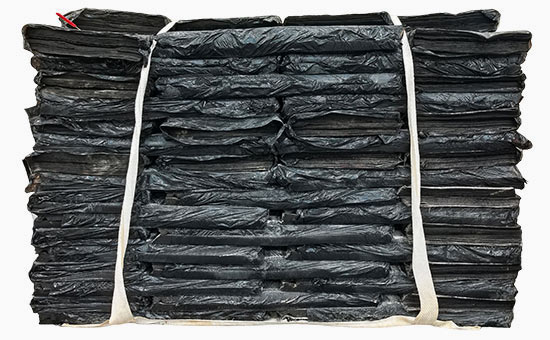
Different varieties of reclaimed rubber products have significant differences in viscosity requirements for the rubber compound: when producing extrusion rubber products such as sealing strips and rubber tubes, extrusion fluidity needs to be emphasized; When producing rubber sheets and rubber shock absorbers, attention must be paid to the stiffness of semi-finished products.
2. How to adjust the viscosity of the compound through the formulation design of recycled rubber products
Many factors affect the viscosity of the compound, with the design of the reclaimed rubber moon, softening system, and reinforcement system being key.
(1) Tips for selecting reclaimed rubber
Reclaimed rubber with high desulfurization and fineness has better fluidity, while reclaimed rubber with more crosslinking residue and high impurity content has relatively higher rubber viscosity; When choosing reclaimed rubber for rubber products, do not simply compare prices; it is recommended to select reclaimed rubber within the Mooney range according to the product's processing method.
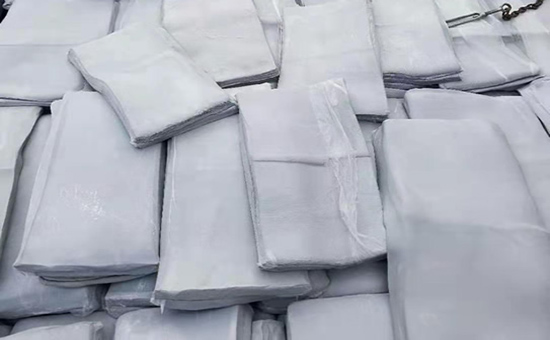
(2) The effect of softening plasticizers on the viscosity of the compound
Using softeners is an important method for adjusting the viscosity of the compound. In the production of reclaimed rubber products, adding appropriate amounts of aromatic oil, naphthenic oil, vegetable oil, or plasticizers can reduce the viscosity of the compound and improve the flow performance of the reclaimed rubber. It should be noted that excessive softener usage weakens the strength, wear resistance, and compression set resistance of reclaimed rubber vulcanized rubber, so it is necessary to balance product performance comprehensively.
(3) The effect of reinforcing fillers on the viscosity of the compound
Additives in reinforcement and filling systems for reclaimed rubber products not only affect cost and physical properties but are also important factors determining the viscosity of the compound.
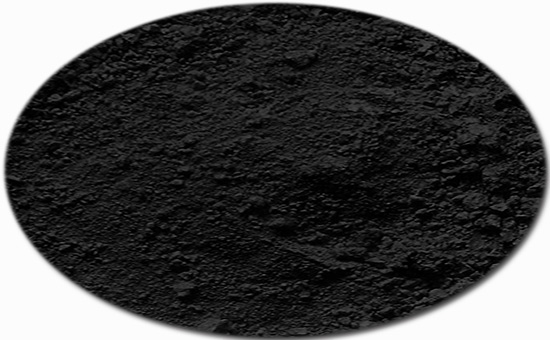
In reclaimed rubber formulations, carbon black with higher reinforcing performance has a more pronounced effect on viscosity improvement, especially high-structure carbon black that increases processing resistance of the rubber compound; Inorganic fillers such as silica, kaolin, and magnesium oxide also increase the viscosity of the compound to varying degrees. As the amount of filler increases, the fluidity of the reclaimed rubber compound gradually decreases, and mixing torque and extrusion pressure increase simultaneously. Lightweight calcium carbonate, talc powder, and other fillers have relatively little impact on the flowability of reclaimed rubber compounds and are more suitable for use as partial incremental fillers.
It should be noted that excessive use of low-strength fillers reduces the mechanical properties of reclaimed rubber products. Therefore, in the production of reclaimed rubber products, reinforcing agents and fillers can be used together, such as carbon black and calcium carbonate, to balance processing performance, cost, and product performance. When the amount of filler used in reclaimed rubber products is high, appropriate adjustments to packing particle size, dispersant, and coupling system can improve packing dispersion efficiency and prevent local agglomeration that leads to abnormal increases in the apparent viscosity of the compound.
3. The effect of reclaimed rubber mixing process on the viscosity of the compound compound
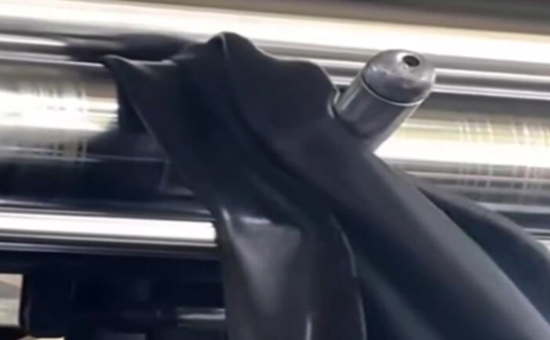
The reclaimed rubber mixing process directly affects the final viscosity of the compound: excessively high mixing temperatures can easily cause premature degradation of the compound; Low temperatures make full plasticization difficult. A reasonable feeding sequence, mixing time, rotor speed, and adhesive discharge temperature help ensure the viscosity of the compound and reduce batch fluctuations in reclaimed rubber mixing.
When designing the formulation for reclaimed rubber products, it is essential to select the appropriate type of reclaimed rubber, reasonably design the formula and mixing process parameters to obtain the appropriate rubber viscosity, laying the foundation for subsequent processing, and truly leveraging the comprehensive advantages of reclaimed rubber in reducing costs, improving processing performance, and stabilizing quality.
Exclusive original article [commercial authorization] reprint, excerpt and excerpt in any form are prohibited without written authorization. Focus on Hongyun rubber: learn the process formula and raw material technology of producing rubber products from recycled rubber to help you reduce costs and increase profits